


Kitchen Taps

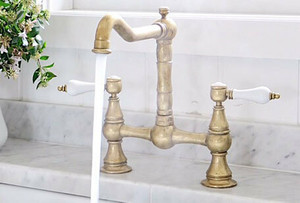


Kitchen taps need to suit the way your sink is installed and used, as well as the style of your kitchen. Our range includes traditional and modern kitchen mixers, bridging sets, separate-handle tap sets, wall-mounted taps, pull-out and spray taps, and drinking-water taps in a wide selection of finishes.
Before choosing a tap, check its mounting type, required tap holes, overall height, spout reach and water-pressure requirements. These practical details are particularly important when replacing existing tapware or pairing a tap with a large farmhouse, Belfast or double-bowl kitchen sink.
Which type of kitchen tap do I need?
The best kitchen tap depends on your existing plumbing, the holes in your sink or benchtop and the functions you want.
- Single-hole kitchen mixer taps: combine hot and cold water through one tap body and require a single mounting hole. They are a practical choice for many new and renovated kitchens.
- Bridging set taps: have separate hot and cold handles connected to a shared spout above the sink or benchtop. They offer a distinctive traditional appearance while delivering mixed water through one outlet.
- Three-hole kitchen taps: generally use separate hot and cold handles with a separate central spout. Check the required hole spacing and individual product dimensions carefully.
- Wall-mounted kitchen taps: connect through the wall rather than the sink or benchtop. They require suitable in-wall plumbing and careful consideration of the tap height and spout reach.
- Pull-out kitchen taps: incorporate a flexible hose into the main spout, making it easier to rinse cookware, large sinks and the sink itself.
- Kitchen spray taps: include a spray function, either within the main tap or as a separate hand spray. On some bridging sets, a separate spray may be connected to cold water only, so check the individual product specifications.
- Drinking-water taps: are smaller secondary taps designed for use with a compatible filtered-water system. Selected ranges offer finishes suited to traditional and decorative kitchen tapware.
Will this kitchen tap fit my sink?
Check your sink, benchtop and surrounding space before ordering. A tap can suit the style of your kitchen but still be unsuitable if its mounting requirements or dimensions do not work with your installation.
- Mounting position: confirm whether the tap will be mounted through the sink, benchtop or wall.
- Number of tap holes: when replacing an existing tap, choosing the same mounting configuration is usually the simplest option. Changing the position or type of tap is common during a renovation, but plumbing or benchtop alterations may be required.
- Tap-hole size: approximately 35mm is a common hole size for a single-hole tap. If your existing hole is larger, check that the base of the new tap will completely cover it.
- Spout reach: compare the spout projection with the position and size of the sink so the water falls comfortably inside the bowl rather than too close to an edge.
- Overall height: make sure the tap fits beneath any window sill, shelf or overhead cabinetry.
- Spout movement: if you have a wide or double-bowl sink, check whether the spout swivels far enough to serve the required area. Not every kitchen tap has the same range of movement.
- Space below the sink: pull-out taps need sufficient unobstructed space for the hose and weight to move freely without catching on pipework or stored items.
An unused tap hole can generally be covered with a cap, but the cap will remain visible. Where holes already exist, selecting a tap with a compatible configuration will usually provide the neatest result.
Check your water pressure and plumbing
Not every kitchen tap is suitable for every water-pressure system. If your home uses a gravity-fed or low-pressure system, check the pressure requirements listed on the individual product page. If the required pressure is not shown, contact our team before ordering.
Changing from wall-mounted tapware to a bench-mounted tap, or the reverse, can require significant plumbing changes. Discuss the proposed layout with your plumber before finalising your selection.
Choosing a kitchen tap finish
Decorative finish names are not universal colour standards. Brass, bronze, gold, nickel and other finishes can vary between manufacturers, even when they have the same name. Products from the same tapware brand and range will generally provide the closest coordination where an exact match is important.
It is usually acceptable to use a different tapware brand in the bathroom because the products are viewed in separate rooms. Within the kitchen, most tapware manufacturers do not produce matching cabinet hardware, so customers commonly select the closest complementary kitchen handles and sink waste. Small differences are generally less noticeable when the products are separated or when the waste is inside the sink.
Also consider how you want the finish to look over time. Some traditional brass finishes are designed to age and develop a natural patina. Check the finish information and care instructions on the individual product before purchasing.
Check availability before arranging installation
Availability and estimated dispatch times can vary by brand, model and finish. Some specialist finishes are plated, made or ordered specifically for the customer and may have longer lead times than standard finishes. Check the estimated dispatch information shown for your selected product and finish, remembering that dispatch time is separate from delivery time.
We strongly recommend having both the kitchen tap and sink on site and checking them together before booking your plumber. Kitchen tapware should be installed by a licensed plumber.
Kitchen tap FAQs
How do I know whether a kitchen tap will fit my existing sink?
Check whether the tap is sink, benchtop or wall mounted; how many tap holes it requires; the size and spacing of your existing holes; and the tap’s base dimensions. You should also compare its height and spout reach with your sink and surrounding space.
What size hole is needed for a kitchen mixer tap?
Approximately 35mm is a common mounting-hole size for a single-hole kitchen tap, but requirements vary between products. Always check the specifications for your chosen tap. If replacing an existing tap, also confirm that the new tap’s base will cover the existing opening.
Can I replace a three-hole kitchen tap with a single-hole mixer?
It may be possible, but the unused holes will need to be covered or the sink or benchtop altered. A plumber can generally fit caps over unused holes, although the caps will remain visible. Matching the new tap to the existing hole configuration will usually produce the neatest result.
Does every kitchen tap have a swivel spout?
No. Spout movement differs between products. Check the individual product details, particularly if the tap needs to reach across a large sink or serve both bowls of a double-bowl sink.
What is the difference between a pull-out tap and a tap with a separate spray?
A pull-out tap has a flexible hose incorporated into its main spout. A separate hand spray is installed beside the main tap as an additional fitting. Some separate sprays supplied with bridging sets may operate on cold water only, so check the product specifications before ordering.
Are all kitchen taps suitable for gravity-fed water systems?
No. Suitability depends on the tap’s required operating pressure and the pressure available at your property. If you have a gravity-fed or low-pressure system, check the product specifications or contact our team before ordering.
Will a brass or bronze kitchen tap match my other fittings?
Not necessarily. Finish names are not standardised, so the colour and texture can vary between brands. Stay within the same brand and range where a close tapware match is important. For cabinet handles and sink wastes, selecting the closest complementary finish is common because exact matches are not always available.
How long will my kitchen tap take to arrive?
Lead times vary between products and finishes. Check the estimated dispatch information for the exact tap and finish you select. Some specialist finishes are made, plated or ordered for the customer and can take longer. Delivery time begins after the order has been dispatched.
When should I book my plumber?
Wait until your kitchen tap and sink have arrived and you have checked them together before booking the installation. This ensures the products and required components are on site and helps avoid unnecessary delays or return visits. Kitchen taps should be installed by a licensed plumber.


