


16/09/26
How to Choose the Right Lighting for Your Home's Architectural Era
Choosing lighting for an older Australian home is not simply a matter of finding a light labelled "heritage".
A Victorian cottage, Federation home, Queenslander, Californian Bungalow and Art Deco house can all suit traditional lighting, but the best choice can vary depending on the shape of the light, the type of glass, the finish, the size of the room and how decorative the home is.
At Restoration Online, we recommend starting with the architecture of the home before choosing the light itself. The age of the house is a useful guide, but the room's proportions, ceiling height, architectural details and existing finishes are just as important.
What lighting should you choose for a heritage home?
The right lighting depends partly on your home's architectural era, but the era should be used as a starting point rather than a strict rule.
Victorian homes can suit anything from simple opal glass pendants to decorative chandeliers. Federation and Edwardian homes often work well with traditional rod pendants and schoolhouse glass. Californian Bungalows generally suit simpler traditional lighting, such as opal glass shades and bowl-shaped fittings, rather than highly ornate designs. Art Deco homes can work well with rounded, stepped or geometric fittings.
Whatever the style, also look at the room itself. Ceiling height, ceiling roses, cornices, timberwork, existing finishes and the overall size of the room can all help you narrow down what will look right.
Outdoor lighting should be approached in much the same way. Look at the style of the verandah, entry, exterior walls and other original details, then choose fittings that work with the age and character of the house. Traditional wall lights, lanterns, under-eave lights and outdoor pendants can all suit heritage homes depending on the location.
Lighting by Australian architectural era: a quick guide
| Architectural era / style | Approximate period | Lighting to consider |
|---|---|---|
| Georgian / Colonial | Late 1700s–1850 | Simple traditional pendants, lanterns and understated wall lights |
| Victorian & Worker's Cottage | 1840–1900 | Opal glass pendants, wall lights and traditional fittings, from simple cottage styles through to more decorative chandeliers in larger Victorian homes |
| Federation / Edwardian | 1901–1920 | Opal glass, rod pendants, schoolhouse lights and smaller decorative fittings |
| Californian Bungalow | 1915–1940 | Schoolhouse lights, opal glass, bowl fittings and simpler traditional styles |
| Art Deco | 1920–1939 | Rounded, stepped or geometric glass, ceiling lights, wall lights and cleaner metal finishes |
These periods overlap, so they are best treated as a guide rather than strict boundaries.
Where does the Queenslander fit?
Queenslander is an Australian architectural style rather than one single era, so it does not fit neatly into the timeline above.
Queenslander homes were built across several architectural periods and can include Victorian, Federation and later influences. This means the age and details of the particular home are more useful than the Queenslander label alone when choosing lighting.
Traditional options may include:
• opal glass pendants
• schoolhouse lights
• simple rod or chain pendants
• wall lights
• lantern-style fittings
• traditional outdoor or verandah lighting
An earlier or more decorative Queenslander may suit Victorian-style lighting, while a later home may work better with Federation, Schoolhouse lighting or simpler Heritage lighting.
The aim is not to find a light specifically labelled "Queenslander". Instead, look at when the house was built, how decorative it is and what features are already there.
How should you choose lighting for a period home?
One of the easiest mistakes to make is searching for something like "Federation light" and assuming anything carrying that description will automatically suit your home.
Instead, look at the room itself.
Consider:
• ceiling height
• whether there is a ceiling rose
• the size of the room
• how simple or decorative the cornices and other details are
• original timberwork and joinery
• existing metal finishes
• whether the house contains features from more than one period
A lighting style can also suit more than one architectural era.
Schoolhouse lights, for example, can work across Federation, Edwardian, Queenslander and Californian Bungalow homes. An opal glass pendant may suit a Victorian, Federation or Art Deco interior depending on its shape, finish and size.
The goal is to choose lighting that looks at home with the architecture rather than following the era too strictly.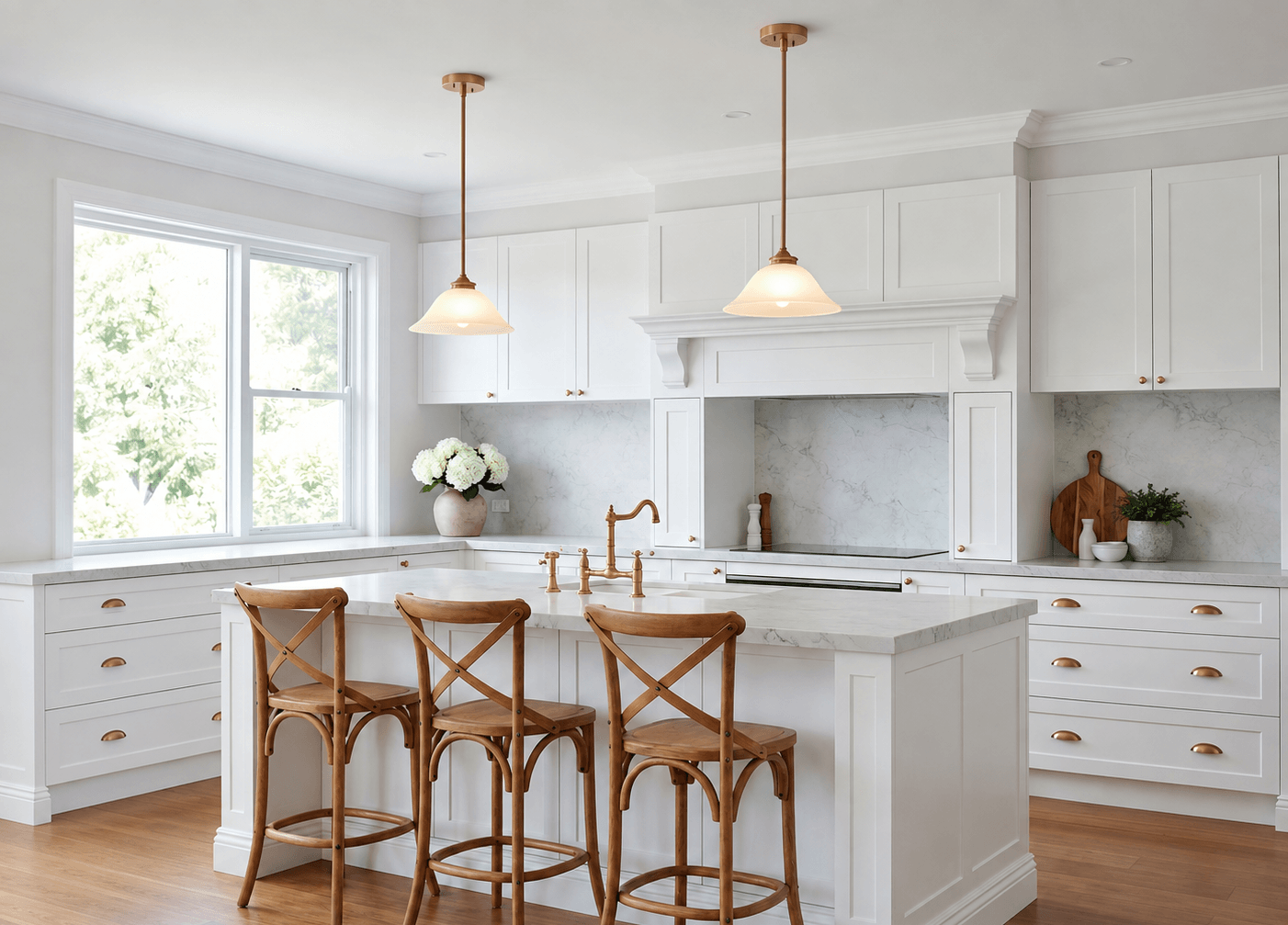
What lighting suits Georgian and Colonial homes?
Georgian and early Colonial Australian homes were generally simpler in appearance and had less decorative detail than many later heritage homes.
Lighting should usually follow the same approach.
Consider:
• simple traditional pendants
• lantern-style fittings
• understated wall lights
• clear or softly diffused glass
• brass or darker traditional finishes
A highly decorative chandelier may look too elaborate in a modest Colonial cottage, even if the fitting itself has a traditional appearance.
For these homes, a simple fitting in a size that suits the room will usually look more natural than something highly decorative.
Our Traditional Lighting and Heritage Lighting ranges are useful places to start.
What lighting suits Victorian homes?
The Victorian period covers a wide range of Australian homes, so Victorian lighting does not automatically mean highly ornate.
The Victorian period is generally divided into Early, Mid and Late Victorian architecture. Early Victorian homes were typically simpler, while Mid and Late Victorian interiors often became more decorative.
Early Victorian homes and Worker's Cottages
Simpler Victorian homes, including many Worker's Cottages, often suit fittings such as:
• opal glass pendants
• modest rod or chain pendants
• compact ceiling lights
• simple wall lights
• traditional lanterns
A Worker's Cottage may have been built during the same period as a grand Victorian terrace, but the two homes can be very different in size and detail.
This is why the year the home was built should not be the only thing you consider.
Mid and Late Victorian homes
If the room has higher ceilings, a large ceiling rose, substantial cornices or more decorative plasterwork, it may suit:
• larger pendants
• decorative glass
• multi-arm lights
• chandeliers
• traditional wall lights
Brass works well across many Victorian interiors, as do darker traditional finishes where they tie in with other features in the room.
Does the size of the Victorian room matter?
Yes.
A large chandelier may look right in a grand Victorian entrance but overwhelm a smaller bedroom or cottage.
This is why we recommend matching the fitting to the particular room and home, rather than choosing by era alone.
Browse our Victorian Lighting range for fittings suited to traditional Victorian-style homes.
What lighting suits Federation and Edwardian homes?
Federation and Edwardian homes retained many traditional details but were often a little less formal than grand Victorian interiors.
These homes may include ceiling roses, decorative cornices, timberwork, coloured or patterned glass and detailed verandahs.
Lighting can follow the same balance.
Consider:
• opal glass pendants
• traditional rod pendants
• schoolhouse lights
• wall lights
• smaller chandeliers or multi-arm fittings for larger rooms
• brass, patina and other traditional finishes
Are schoolhouse lights suitable for Federation homes?
Yes.
Schoolhouse lighting can work particularly well in Federation, Edwardian and Californian Bungalow homes, as well as many Queenslanders from a similar period.
The recognisable curved opal glass gives a traditional look without being too decorative, making schoolhouse lights suitable for hallways, kitchens, bedrooms and living areas.
Explore our Schoolhouse Lighting range for examples of this style.
What lighting suits a Californian Bungalow?
Californian Bungalows became common in Australia during the early twentieth century and are generally lower, wider and less ornate than many Victorian homes.
They often suit traditional lighting that is simple rather than ornate.
Consider:
• schoolhouse pendants
• opal glass
• bowl-shaped shades
• rod pendants
• three-chain pendants where the size suits
• simple wall lights
• brass, patina, chrome or darker finishes
Warm brass can work particularly well alongside timber, while darker finishes can suit homes with stronger Arts and Crafts details.
The main thing is to look for fittings that feel traditional without being overly decorative.
Browse our Bungalow Lighting range for fittings suited to this style of Australian home.
What lighting suits an Art Deco home?
Australian Art Deco homes are most commonly associated with the 1920s and 1930s and often feature strong geometry, symmetry, rounded corners, stepped details and cleaner decorative lines.
For an Art Deco home, look for lighting with shapes that relate to those features.
Consider:
• stepped or geometric glass
• rounded opal shades
• cleaner, less ornate fittings
• ceiling lights
• rod pendants
• wall lights
• batten fix fittings
• chrome, nickel, brass or bronze finishes
Does Art Deco lighting need to be highly decorative?
No.
Often, the shape of the fitting or glass is enough.
A simple opal glass shade with a stepped, tiered or geometric profile can look more natural in an Art Deco interior than a fitting covered in obvious decorative motifs.
Browse our Art Deco Lighting range for examples of fittings suited to these interiors.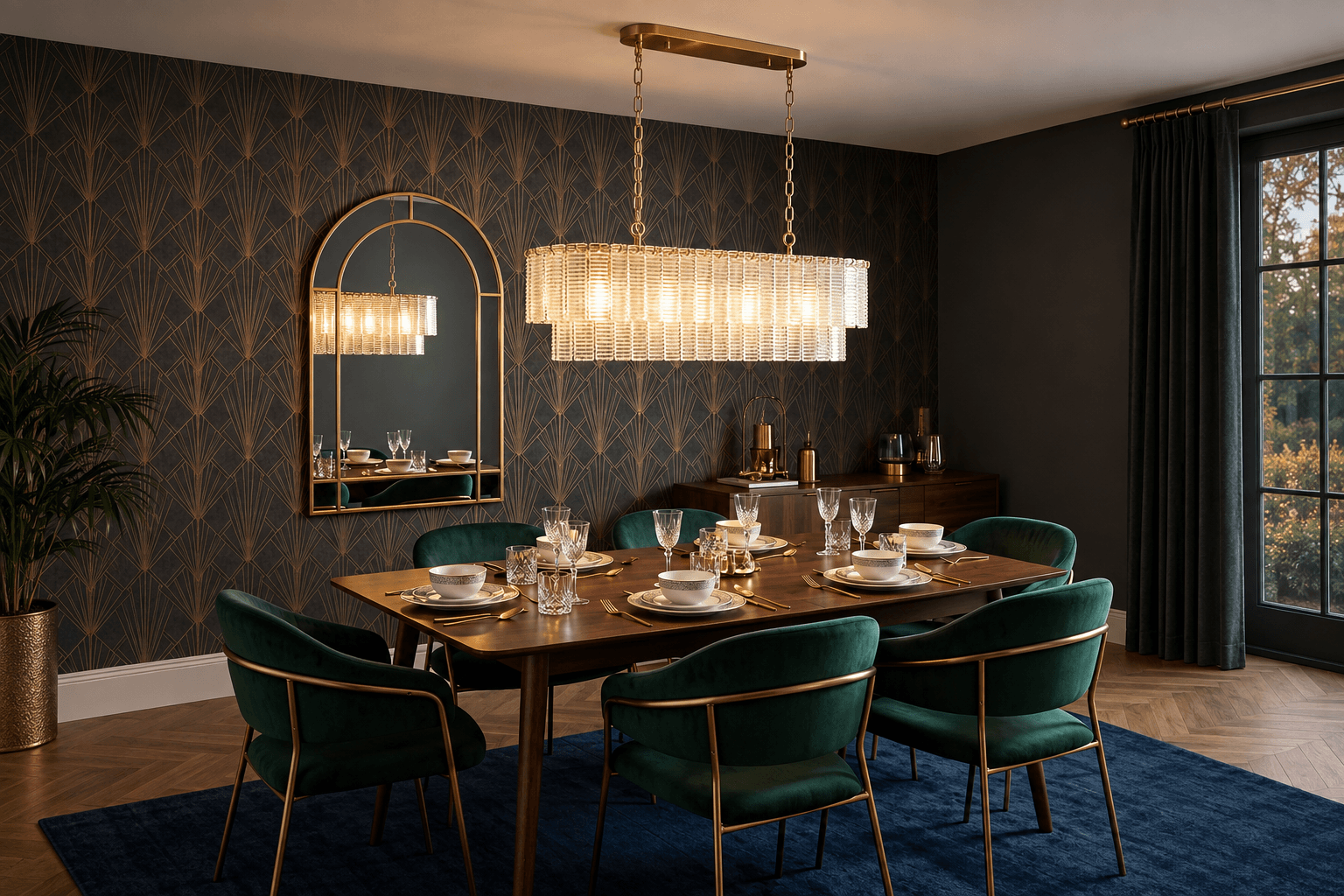
What outdoor lighting suits a heritage home?
Outdoor lighting should complement the exterior of the house in the same way that indoor lighting works with the interior.
Victorian and Federation homes can suit traditional lantern-style wall lights and verandah pendants, while Queenslanders often have verandahs and covered areas where wall, chain, rod or under-eave lighting may be appropriate. Californian Bungalows can work well with simpler traditional exterior wall lights and porch lighting, while Art Deco homes may suit cleaner shapes or fittings with rounded or geometric details.
As with indoor lighting, the fitting does not need to be an exact historical reproduction. Look for a style, finish and amount of detail that works with the exterior of the particular home.
The mounting position also matters. A light beside a front door, beneath a verandah, on an exposed wall or on top of a gate pillar may require a different type of fitting.
You can browse our full Outdoor Lighting range for wall, pendant, pillar, post and under-eave options.
Does period lighting need to match the exact age of the house?
No.
Unless you are undertaking a strict conservation project, you generally do not need to find an exact copy of a light that would have been installed when the house was built.
There are a few different ways to approach it.
Keep it historically appropriate
Choose fittings with shapes, materials and details that look appropriate for the age and style of the home.
Choose a traditional style without being exact
You can use traditional lighting that works well with the house without trying to reproduce every historical detail.
Use modern lighting as a contrast
In a newer extension, you may prefer simpler modern lighting while keeping traditional fittings in the original part of the home.
All of these approaches can work. The important thing is that the choice feels deliberate and suits the space.
What lighting finish will suit my home?
You do not need to choose a finish purely because of the age of your home.
Look at the timber, door hardware, tapware and other metal finishes already in the room and choose something that works comfortably with them. For exterior lighting, you can also look at finishes already used on the front door, window hardware, verandah details and other outdoor fittings.
Brass
Brass works across many Victorian, Federation, Edwardian and Bungalow interiors, particularly where the home has warm timber or existing brass hardware.
Patina, bronze and darker finishes
These can work particularly well in Federation homes, Californian Bungalows and other interiors with darker timber or stronger traditional details.
Chrome and nickel
Chrome and nickel can suit Art Deco and later interiors, although they may also work in earlier homes where similar finishes are already present.
Not every metal finish in a house needs to match exactly. It is more important that they work well together.
What type of glass suits a heritage home?
The shape and appearance of the glass can influence the overall look of the light just as much as the metal finish.
Opal glass
Opal glass is one of the most versatile choices for traditional homes and appears across Victorian, Federation, Edwardian, Queenslander, Bungalow and Art Deco-style lighting.
Schoolhouse glass
Schoolhouse glass is particularly useful for Federation, Edwardian, Queenslander and Californian Bungalow interiors.
Bowl glass
Bowl glass works well with traditional bowl pendants and compatible three-chain suspensions, particularly in larger rooms.
Geometric or stepped glass
These shapes can work particularly well with Art Deco interiors.
Clear glass
Clear glass often suits lanterns and simpler traditional fittings.
As with the fitting itself, choose the glass for the room as well as the age of the home.
Should every light in a heritage home match?
No.
Using exactly the same light throughout the house can sometimes make the interior feel too coordinated.
Instead, you can create consistency by repeating one or two features, such as:
• the same finish
• similar opal glass
• related shapes
• a similar amount of decorative detail
For example, you might use a larger pendant in the hallway, smaller ceiling lights in the bedrooms and wall lights in adjoining rooms, all connected by the same finish or glass style.
What about a modern extension on a heritage home?
A modern extension does not necessarily need heritage-style lighting.
If the new part of the home is deliberately contemporary, simpler lighting can help separate the new space from the original house.
Alternatively, traditional lighting can continue into the extension if you want the whole home to feel more consistent.
There is no single right approach. What matters is that the lighting works with the way the new and old parts of the home have been designed.
What practical details should you check before ordering?
A light can look perfect for the age and style of the house and still be the wrong choice for the space.
Before ordering, check:
• overall width and height
• ceiling height
• finished pendant drop
• wall light projection
• globe type and quantity
• whether the pendant can be shortened or extended
• mounting method
• indoor or outdoor suitability
• IP rating where relevant
For bathrooms or outdoor areas, the exact installation position matters. Our What Is an IP Rating? guide explains what IP ratings mean, although final suitability should be confirmed with your licensed electrician.
If you're unsure about the difference between a rod pendant, chain pendant, wall light, ceiling light or batten fix, our knowledgeable team can help you compare the main types before ordering.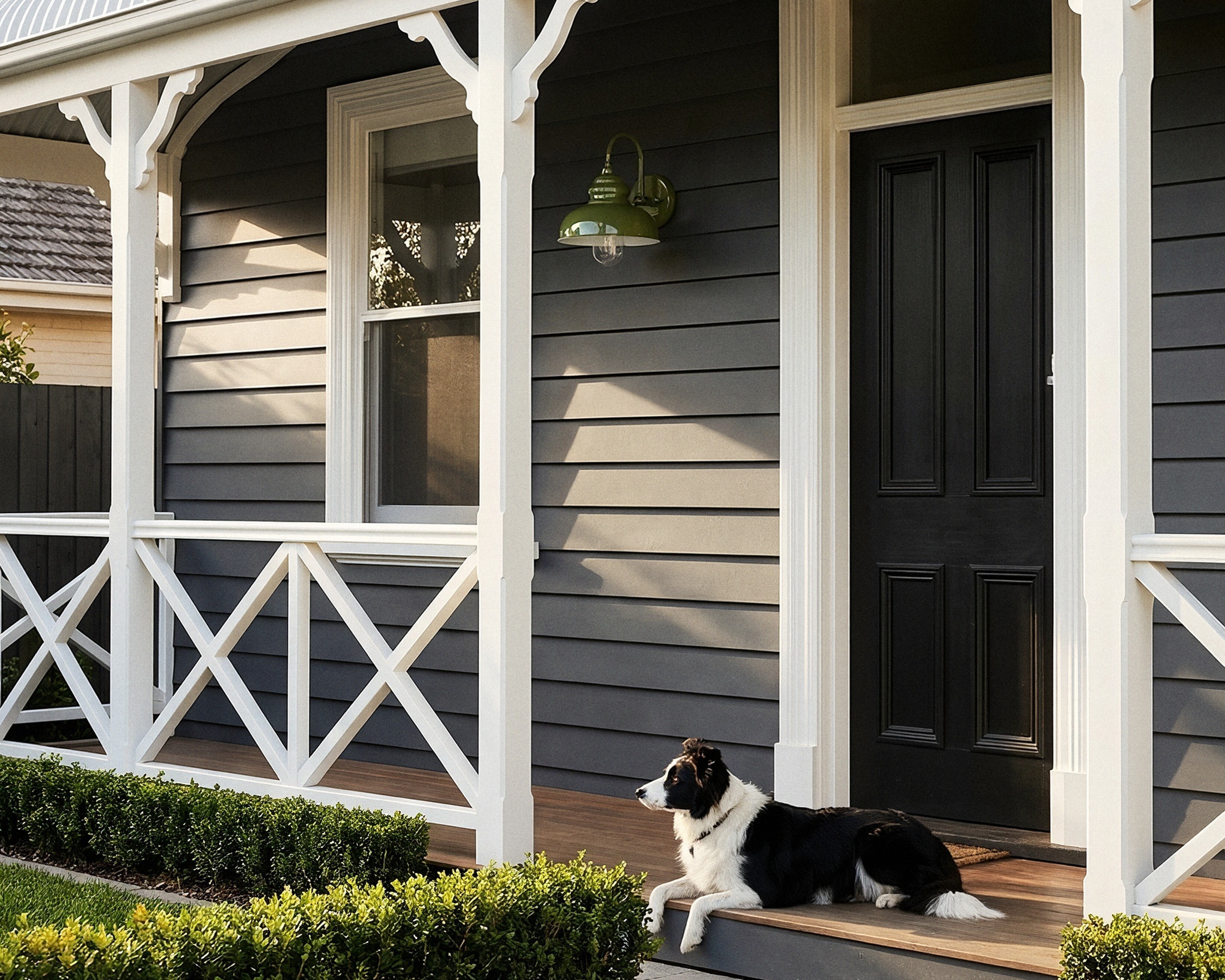
Frequently Asked Questions
What lighting suits a Victorian home?
Smaller or earlier Victorian homes, including Worker's Cottages, may suit opal glass pendants and simple traditional fittings. Larger Mid and Late Victorian rooms can often accommodate chandeliers, multi-arm lights and more decorative pendants.
What lighting suits a Federation home?
Opal glass, schoolhouse lights, rod pendants and traditional wall lights commonly work well with Federation architecture.
What lighting suits a Queenslander home?
Queenslander is a style rather than one single architectural era, so suitable lighting depends on when the house was built and how decorative it is. Opal glass pendants, schoolhouse lights, rod or chain pendants, wall lights and traditional verandah fittings can all work well.
What lighting suits a Californian Bungalow?
Schoolhouse lights, opal glass pendants, bowl-shaped fittings and simple traditional wall lights are good options to consider. Brass, patina, chrome and darker finishes can all work depending on the interior.
What lighting suits an Art Deco home?
Look for rounded, stepped or geometric shapes and cleaner decorative details. Opal glass and finishes such as chrome, nickel, brass and bronze can all be suitable.
Are schoolhouse lights suitable for Federation homes?
Yes. Schoolhouse fittings can work across Federation, Edwardian, Queenslander and Californian Bungalow homes.
Does heritage lighting need to be historically exact?
Not usually.
Unless you are completing a strict historical restoration, it is generally more useful to choose a fitting that looks appropriate for the age and style of the house than to find an exact reproduction.
Can modern lighting work in a heritage home?
Yes.
Modern lighting can work particularly well in contemporary extensions. In original heritage rooms, traditional or period-style fittings often create a more natural connection with the architecture.
Should all the light fittings in my home match?
No.
Aim for some connection between the fittings rather than making every light identical. Similar glass, finishes, shapes or decorative details can provide consistency.
How do I know what architectural era or style my home is?
Start with its approximate age and look at the roof, verandah, windows, brickwork, timber details, ceilings, cornices and internal joinery. Keep in mind that many Australian homes have been renovated or altered over time, so they may include features from more than one architectural period.
Choosing lighting for your home
If you're still unsure which lighting style to choose, start with the house rather than the light fitting.
Look at the room's size, ceiling details, existing finishes and how simple or decorative the home is. Then use the architectural era or style to narrow down suitable options.
Every week we help customers choose lighting for Victorian, Federation, Edwardian, Queenslander, Californian Bungalow, Art Deco and other traditional Australian homes.
If you need help narrowing down your choices, you can always contact us.
You can also explore our Victorian Lights, Bungalow Lights, Art Deco Lights, Schoolhouse Lights, or our full Lighting range.


