


19/08/26
What Is a Dummy Door Handle?
If you’re choosing new door handles, you may have come across the term dummy door handle and wondered what it actually means.
Put simply, a dummy door handle is a fixed, non-operational handle that doesn’t operate a latch or lock. It gives you something to push or pull the door with, while still matching the other door handles throughout your home.
We commonly use dummy handles on wardrobes, linen press doors, cupboards and French doors where a working latch isn’t required.
What’s the difference between a dummy handle and a normal door handle?
Most door handles in your home have a job to do.
A passage handle turns to operate a latch. A privacy handle operates a latch and works with a privacy function, such as on a bathroom door. An entrance handle is used with suitable locking hardware.
A dummy handle is different because turning a handle isn’t required to open the door.
A good example is a full-size linen press or wardrobe door. The door might be held closed with a double ball catch or magnetic catch. You simply pull the door to open it and push it closed again, so there is no need for the handle to operate a latch.
That’s where a dummy handle makes sense.
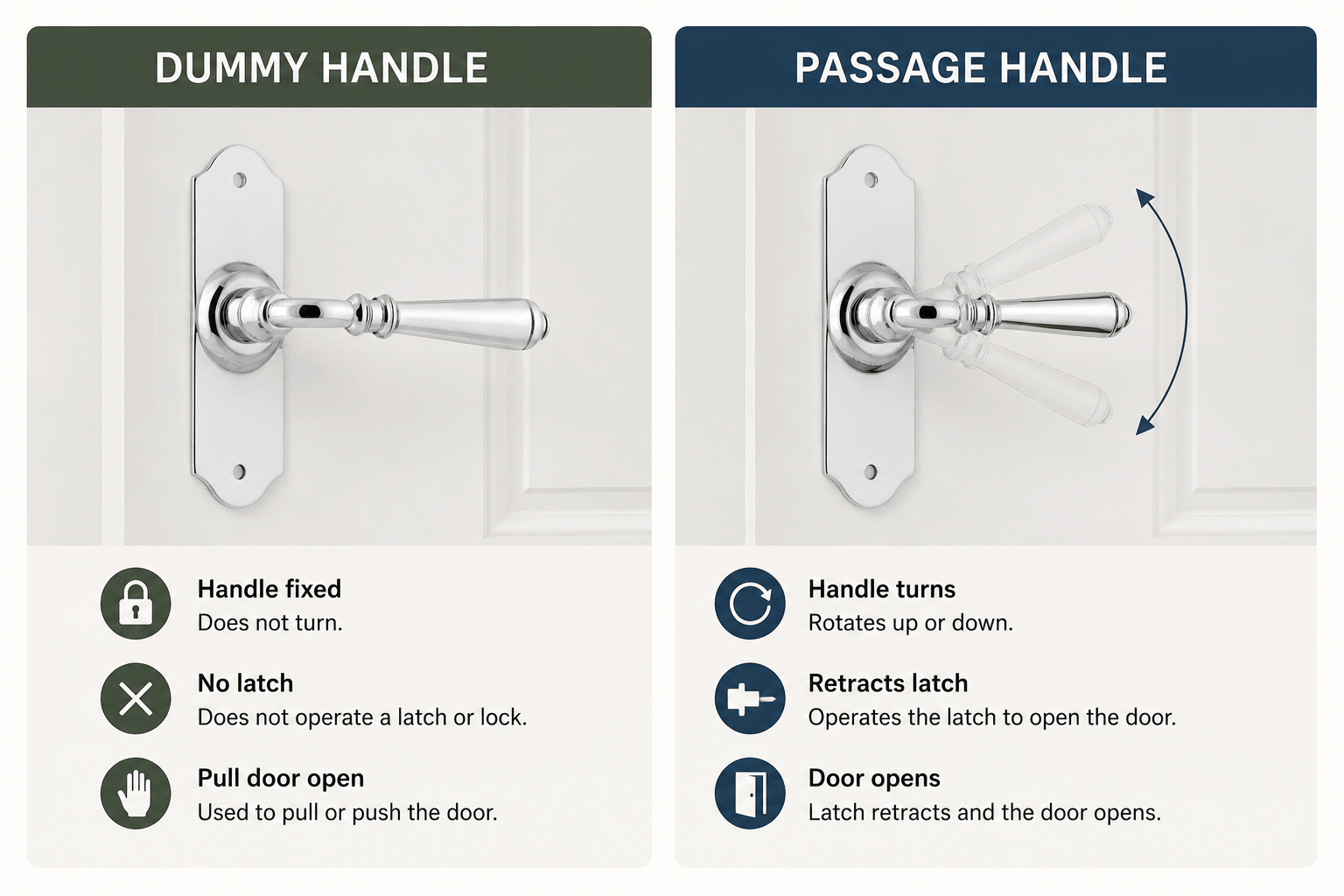
Diagram above: Dummy vs Passage Handle
Does a dummy door handle turn?
A properly set up dummy handle is fixed and doesn’t turn.
This might sound like a small detail, but it makes quite a difference when you actually use the door.
A question we’re sometimes asked is whether you can simply install a normal passage handle without connecting it to a latch. Technically, you can. The problem is that the handle will still move.
When someone grabs a lever handle and it moves, their natural reaction is to push it down to open the door. If nothing happens, they can end up trying to turn or force a handle that isn’t connected to anything.
With a fixed dummy handle, there’s no confusion. As soon as you grab it, it feels fixed, so you naturally use it in the same way you would use a pull handle.
For this reason, if a door is intended to have a dummy function, we generally recommend setting the handle up properly as a dummy rather than simply leaving a standard handle free to turn.
Where would you use a dummy door handle?
One of the most common uses is on wardrobe, cupboard and linen press doors, particularly when they are full-size doors and you want them to match the other internal doors in the house.
For example, you might have three doors next to each other in a hallway. Two are normal room doors with passage handles, while the third opens into a linen cupboard and is held closed with a ball catch.
Using a matching dummy handle on the linen cupboard means all three doors can have the same style of hardware, even though they operate differently.
Dummy handles can be useful for:
- linen press doors;
- wardrobe doors;
- full-size cupboard doors;
- doors held closed with a ball catch or magnetic catch; and
- the secondary door in a pair of French doors.
The important question is whether the handle actually needs to retract a latch. If it doesn’t, a dummy function may be the better option.
Can you turn a normal door handle into a dummy handle?
Depending on the handle, yes.
Some door handles are supplied specifically as fixed dummy handles. With others, we can use a special dummy spindle to convert a standard handle into a fixed, non-operational handle.
One option we use is a Taylor’s spindle for dummy door handles. It allows a compatible handle to be set up so that it remains fixed rather than turning like a normal passage handle.
This is particularly useful when you’re trying to keep your door hardware consistent throughout the house. You can choose the same handle design for your normal doors and then use the appropriate dummy configuration on the doors that don’t require a latch.
View the Taylor’s spindle for dummy door handles
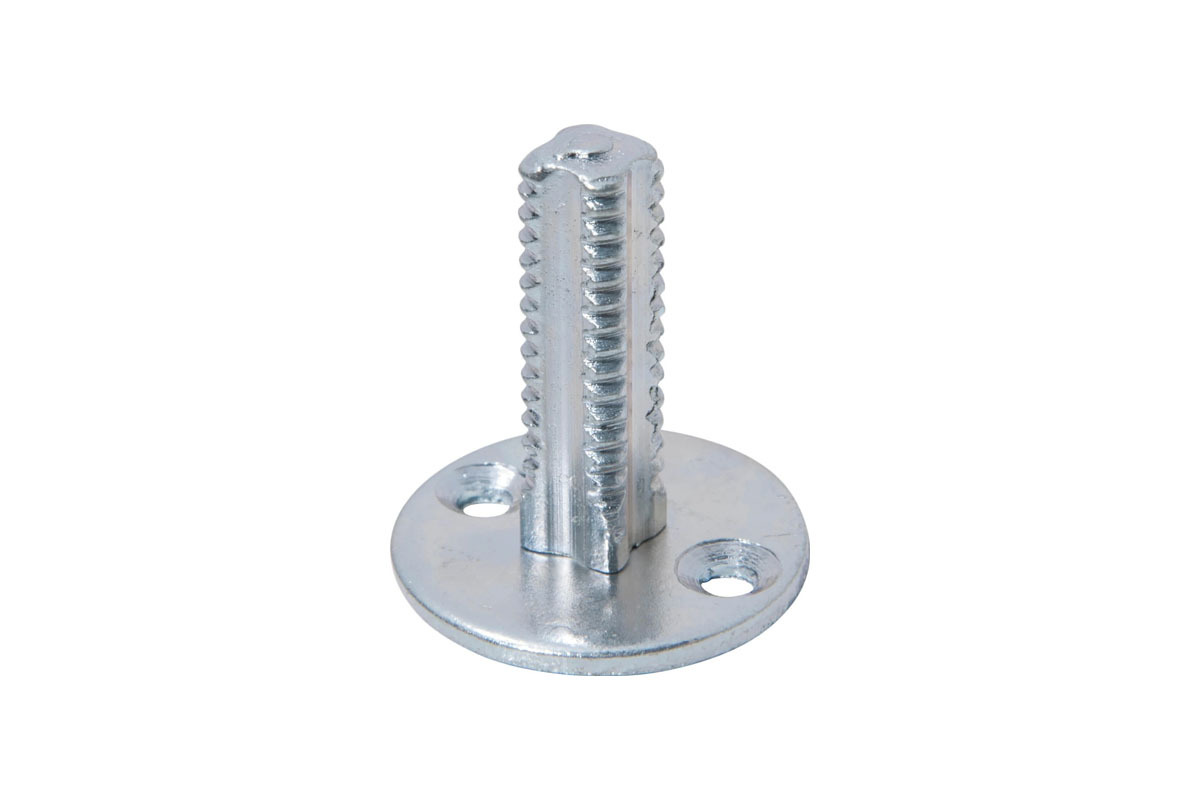
Image above: Taylors Spindle
Do dummy door handles come as a pair?
This is one thing worth checking before you order, because dummy handles aren’t always supplied in the same way.
Depending on the particular product, a dummy handle may be supplied as a single handle or as a pair.
For example, some applications only require a handle on one side of the door, while others need matching handles on both sides.
We specify how the dummy function is supplied on our product pages, so when you’ve chosen the handle you like, check the available functions and product information to see how the dummy version is configured.
Why would you use dummy handles on French doors?
French doors are a slightly different application because dummy handles are often used for symmetry rather than because you need another handle to open the doors.
With a traditional pair of French doors, we refer to the two doors as the primary (active) door and the secondary (inactive) door.
The secondary door is the door you close first. It is normally secured into position using bolts. Once that door is bolted, the primary door closes against it and is the door you normally open first.
Because the secondary door is secured by its bolts, you do not need a functioning set of handles on it, and a functioning latch setup would not work correctly in this application.
But visually, having handles on only one of the two doors can look odd.
For that reason, it’s common to install dummy handles on the secondary door to match the functioning handles on the primary door. You get the balanced appearance of handles on both French doors without installing an unnecessary second latch or lock.
This is one of those situations where understanding how the doors will actually operate before ordering your hardware can save a lot of confusion.
If you’re working out what hardware you need for French doors, we cover the complete setup in our guide:
Read our French door handles and hardware guide
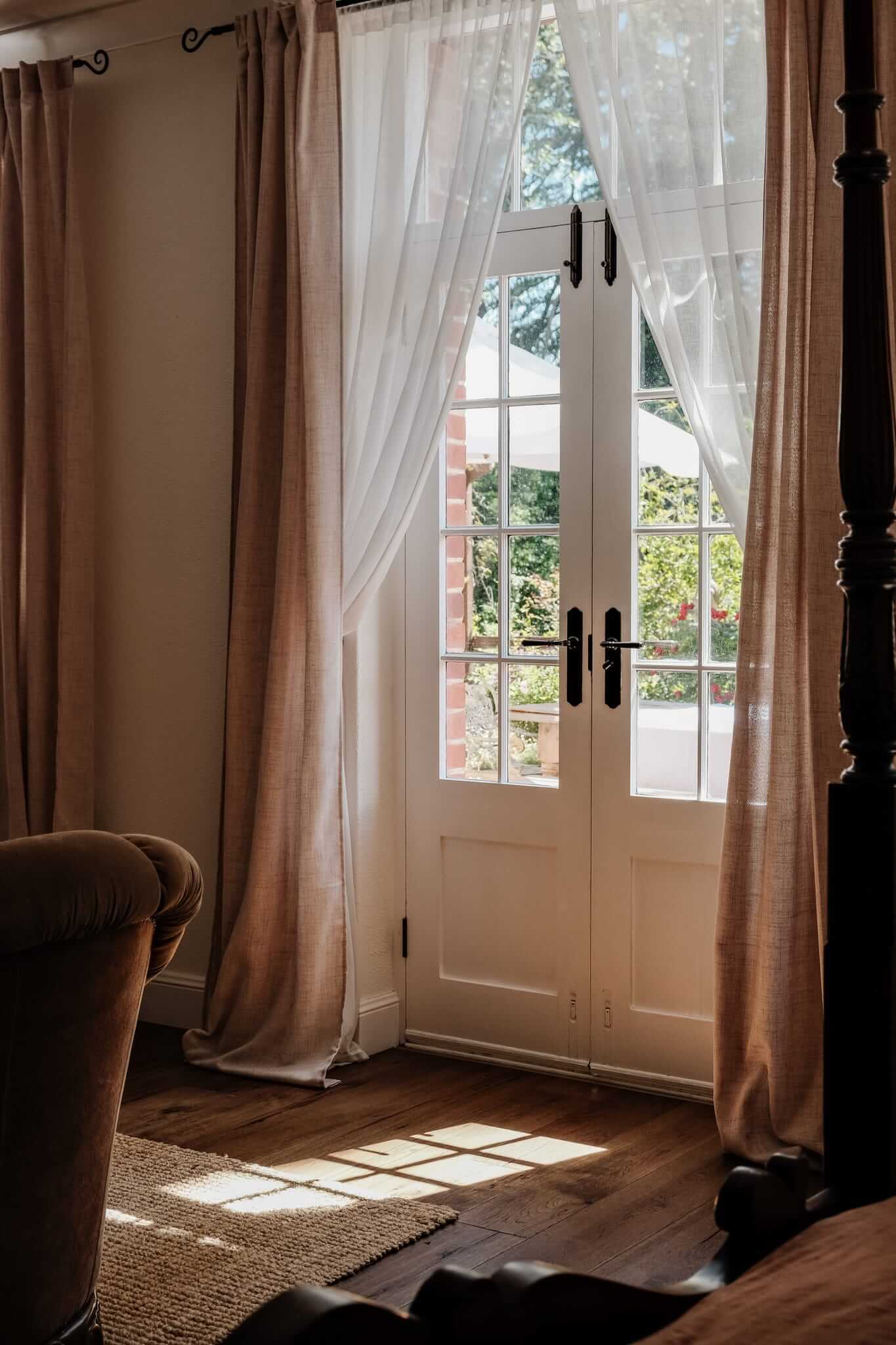
Image above: a pair of french doors using locking and dummy handles
How do I know if I need a dummy handle?
When we’re helping someone work out which handle function they need, the easiest question is:
Does turning this handle need to retract a latch or operate a lock?
If the answer is yes, you need an operational handle, such as a passage, privacy or entrance function depending on the door.
If the answer is no, and the handle is really there so you can push or pull the door, a dummy handle is usually the appropriate choice.
This is often the case when the door is already held closed by a magnetic catch, ball catch or another piece of hardware.
Dummy door handle FAQs
What does dummy mean on a door handle?
A dummy door handle is a fixed handle that doesn’t operate a latch or lock. It is mainly used to push or pull a door open while providing the appearance of a normal door handle.
Does a dummy door handle turn?
No. A properly configured dummy handle is fixed so the lever or knob doesn’t turn. This helps make it obvious that the handle should simply be used to push or pull the door.
Does a dummy door handle need a latch?
No. Dummy handles are generally used specifically because the handle doesn’t need to operate a latch. The door may instead be held closed with something like a magnetic catch or double ball catch.
Can I use a normal door handle as a dummy handle?
You can install some normal handles without a latch, but we generally prefer the handle to be properly fixed in a dummy configuration. Otherwise, the handle may still turn even though it doesn’t operate anything, which can be confusing when someone uses the door.
Depending on the handle, a dummy spindle such as a Taylor’s spindle can be used to create the fixed dummy function.
Do I need one dummy handle or two?
It depends on the door and the particular handle you choose. Some dummy handles are supplied individually and others as a pair, so always check the product information before ordering.
Can dummy handles match my other door handles?
Yes, and this is one of the main reasons people use them. Where a handle is available in a dummy function, you can use the same handle design across your home while choosing the correct function for each individual door.
Choosing the right handle for your door
If you’re selecting handles for a whole house, we recommend working out how each door closes and what you need the handle to do before deciding on the function.
Your bedroom might need a passage or privacy function, your linen press might need a dummy handle, and your French doors might need a combination of functioning and dummy handles. They can still all use the same handle design.
Once you’ve found a style you like, check the available functions on the product page to see whether it can be supplied in the configuration you need.


