


07/08/26
Everything You Need for a Heritage Front Door
Every week we help customers choose hardware for heritage front doors, and one of the main challenges is working out which pieces are decorative, which pieces are needed for the door to operate properly, and what pieces will be compatible with each customer's individual door.
The handle, lock and hinges need to suit the construction and measurements of the door. Other fittings, such as centre door knobs, door knockers, house numbers and doorbells, can then be selected to suit the style and available space.
This guide explains the main types of heritage front door hardware, what each piece does and what we recommend checking before ordering.
Quick answer: What hardware does a heritage front door need?
Most front doors need:
• A working door handle, door knob or entry handleset
• A compatible lock or latch
• Hinges suited to the size, thickness and weight of the door
• A door stop to prevent the handle or door from hitting the wall
Depending on the style and setup of the entrance, you may also choose:
• A centre door knob
• A door knocker
• House numbers
• A manual doorbell or electric bell button
• An escutcheon or keyhole cover
• A letter plate
• Door bolts for a pair of doors
| I want to… | Hardware |
|---|---|
| Open and close the door | Door handle, door knob or entry handleset |
| Lock the door | Mortice lock, Euro lock or deadbolt |
| Support the door | Door hinges |
| Add a fixed, decorative knob | Centre door knob |
| Add a way for visitors to knock | Door knocker |
| Display the property number | House numbers |
| Add a bell | Manual doorbell or electric bell button |
| Stop the handle hitting the wall | Door stop |
| Secure the inactive door in a pair | Flush bolts or surface bolts |
1. First things first: check the door
Before choosing the style or finish, check how the door has been made and whether you are working with a new or existing door.
If you are replacing old hardware, the new pieces may need to fit or cover existing lock cut outs, bore holes, or marks and screw holes left by the previous fittings. This can limit which backplate sizes, locks and fixing arrangements will work.
We recommend checking:
• Overall door thickness
• Width of the flat door stile
• Position of panels, glass and decorative mouldings
• Existing bore holes, marks and lock cut outs
• Existing lock or latch backset
• Direction the door opens
• Whether it is a single door or a pair (French doors)
• If a pair of doors, whether the doors are rebated
• Exposure to rain, direct sunlight or coastal conditions
It's important to measure the door stile to determine your backset size and ensure the handle sits nicely in the centre of this panel. We'll explain this in more detail further on.
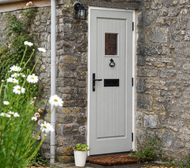
Figure 1. The above shows where to measure the flat door stile. Only include the flat timber where the handle backplate or rose will sit, and do not include raised mouldings or panel details.
Key front door hardware terms
• Door stile: The vertical section of the door where the handle and lock are usually installed
• Backset: The distance from the edge of the door to the centre of the handle spindle or keyhole
• Spindle: The square bar that passes through the door and connects the handles or knobs
• Escutcheon: A small plate that surrounds a keyhole or cylinder
• Rebated door: A pair of doors with an L shaped, stepped edge that overlaps the other door when closed
• Active door: The door in a pair that is opened and used most often
• Inactive door: The door in a pair that is normally held closed with bolts
These are the main terms we recommend understanding before choosing front door hardware.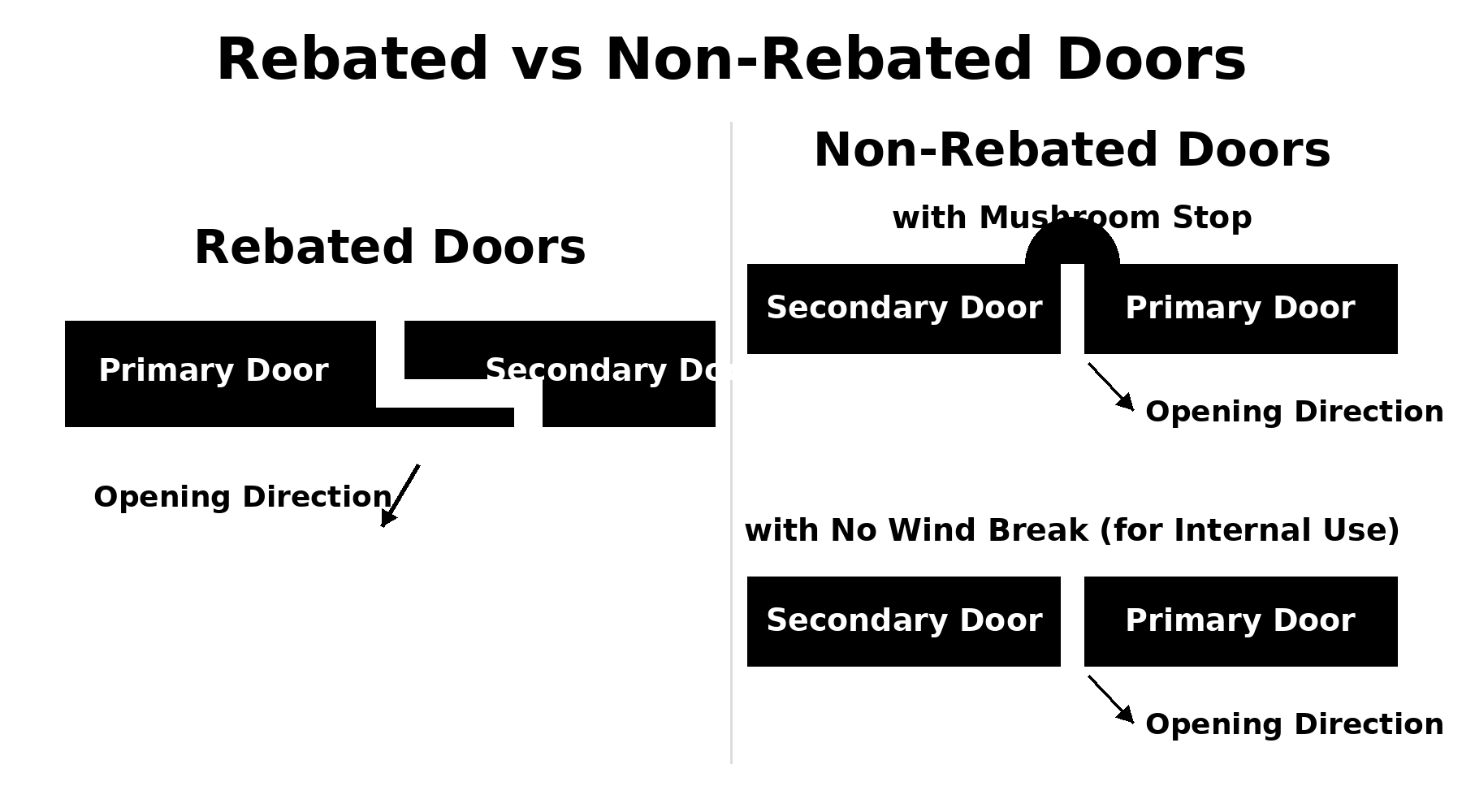
Figure 2. If you have a pair of French doors, check whether the meeting edges are rebated before choosing the lock and other hardware. The above shows the difference between rebated and non rebated doors, as well as the active and inactive door.
2. What hardware does each front door usually need?
When we help customers plan a front door, we usually separate the hardware into two groups: working hardware and additional door furniture.
Working hardware
This is the hardware needed for the door to open, close and lock.
A typical front door may need:
• A working handle, knob or entry handleset
• A compatible lock or latch
• Hinges
• A strike plate or keeper, which is usually supplied with the lock or latch
• A door stop
Additional door furniture
These pieces may be practical, decorative or both.
Depending on the entrance, you may also choose:
• A centre door knob
• A door knocker
• House numbers
• A doorbell
• An escutcheon
• A letter plate
• Door bolts for double doors
Not every entrance needs every item. It is usually best to confirm the working handle, lock and hinges first, then plan the remaining fittings around them.
Shop door hardware and accessories.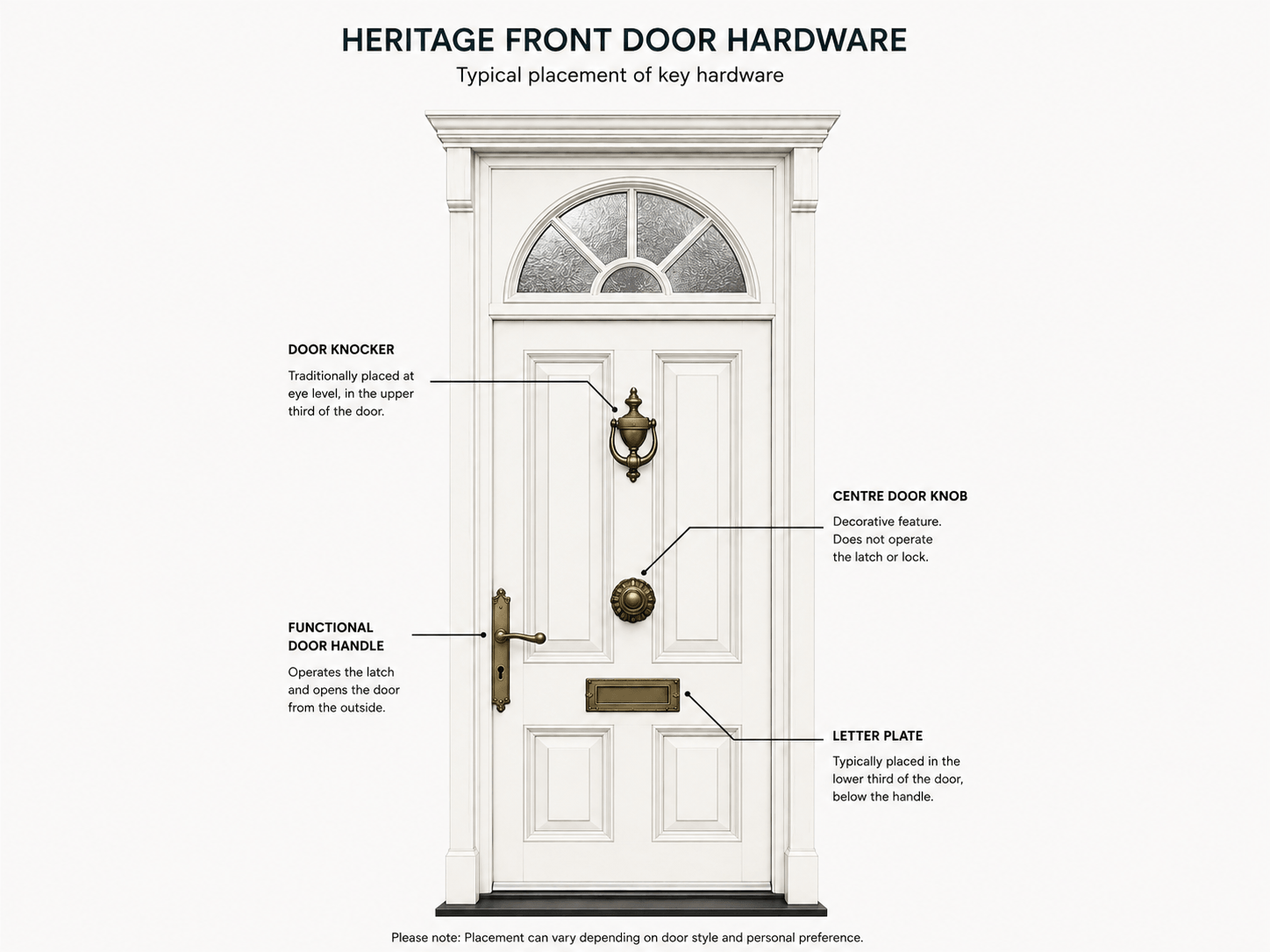
Figure 3. The above shows a typical layout for a functional door handle, centre door knob, door knocker and letter plate on a heritage front door. The exact position will vary depending on the style, panel layout and available space on the door.
3. What type of front door handle or knob do I need?
The handle or knob needs to suit the look of the door, but it must also operate the correct latch or lock.
Common options for a heritage front door include:
• Lever handles on long backplates
• Lever handles on separate roses
• Door knobs
• Pull handles used with a separate lock
• Entry handlesets
Lever handles
Lever handles on long or round backplates are commonly used on Victorian, Edwardian and Federation style doors.
Depending on the function, the backplate may have:
• A traditional keyhole
• A Euro cylinder hole
• A separate Euro cylinder and escutcheon
• No keyhole where the handle only operates a latch and is used with either a separate deadbolt or a Euro roller lock, Euro cylinder and escutcheon
Before ordering, check the plate length, width or diamter against the bore hole size, spindle position, keyhole position, fixing options and available flat space on the stile.
Door knobs
Door knobs are working knobs that turn a spindle to operate a compatible lock or latch.
The backset is particularly important with a knob. If the knob is positioned too close to the edge of the door, there may not be enough room for your hand between the knob and the door frame.
A deeper backset can provide more hand clearance, but the lock body must still fit within the door stile.
As with lever handles, not all door knobs are compatible with existing bore holes or door preparations. Be sure to check the bore hole size against the knob backplate size, as well as the fixing method. Fixing options can vary between knobs, and some doors may require a knob with a tie bolt fixing for a more suitable or secure installation.
Entry handlesets
An entry handleset usually combines a large exterior pull handle with a thumb operated latch. These include the internal handle (either a lever or knob) and locking components.
Entry handlesets are useful where a larger pull handle is preferred and you would like the main operating parts supplied as a coordinated set.
Read more in our guide: What is an Entry Handleset?.
Can an internal door handle be used on a front door?
Not every handle function is suitable for an entrance door.
A passage handle operates a latch but does not lock, while a privacy handle provides a low security locking function generally intended for bedrooms and bathrooms. Dummy handles are fixed and do not operate a latch or lock, making them more commonly suited to wardrobes, linen presses and other non latching doors.
A front door will usually require an entrance, Euro, traditional keyhole or another suitable locking configuration. However, there are some exceptions. For example, a passage handle can be used with a latch where a separate deadbolt provides the locking function. Fixed dummy handles may also be used with a Euro roller lock, Euro cylinder and matching escutcheon, allowing the door to be pulled open and closed while the cylinder provides the locking function.
The individual product information should always be checked to confirm the handle and finish are suitable for external use.
For a more detailed explanation of handle functions, read How to Choose the Right Door Handles.
4. What lock does a heritage front door need?
The correct lock depends on the handle, door construction and level of security required.
Heritage style door handles are commonly paired with either a traditional mortice lock or a Euro mortice lock.
Traditional mortice locks
A traditional mortice lock is installed into a pocket cut into the edge of the door. It is commonly operated with a skeleton style key and can be used with compatible lever handles or door knobs.
Mortice locks are available in different backsets and security levels. A lock should not be selected based only on the visible faceplate.
Euro mortice locks
A Euro mortice lock is also installed inside the door, but it uses a separate Euro cylinder.
This allows a traditional style handle to be used with a modern cylinder and key arrangement. The handle, lock and cylinder all need to be compatible.
You can choose a cylinder that has a key on both sides, or a key on the outside and a thumbturn on the inside:
Key outside / thumbturn inside:
Unlocked with a key from outside and a thumbturn from inside. This is a convenient option for everyday residential use.
Key both sides:
Requires a key to lock or unlock from either side. This can provide added security, particularly on doors with glass near the lock.
What is a lock backset?
The backset is the distance from the edge of the door to the centre of the handle spindle or locking point.
The backset affects:
• Whether new hardware aligns with existing holes
• Hand clearance when using a knob
• Whether the lock body fits within the stile
• Where the handle sits on the door (centre of the style is best)
If you are replacing an existing lock, measure the current backset rather than assuming a standard size will fit.
Read our backset measuring guide.
Shop mortice locks, Euro mortice locks and Euro cylinders.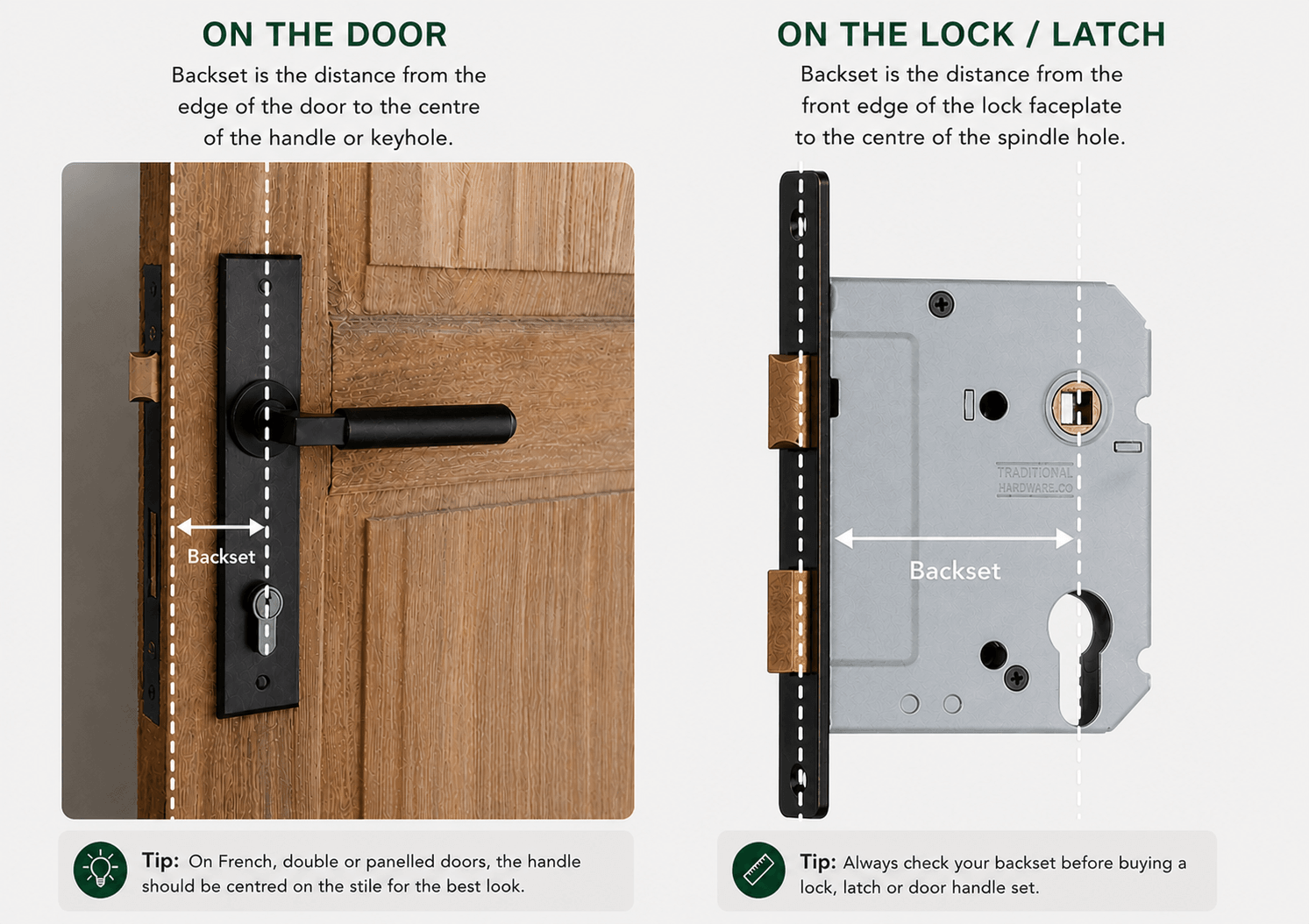
Figure 4. The above shows how to measure the backset from the edge of the door to the centre of the spindle or keyhole/cylinder. If you are replacing an existing lock, we recommend checking this measurement before ordering.
5. What hinges does a front door need?
Hinges support the weight of the door and affect how it opens, closes and sits within the frame.
Common hinge types include:
• Fixed pin hinges
• Ball bearing hinges
• Broad butt hinges
• Parliament hinges
A heavy solid timber entrance door will generally need more support than a lightweight internal door.
Ball bearing hinges are often considered for heavier or frequently used doors. Parliament or broad butt hinges may be needed where the door must open clear of a deep architrave or wall, or where you would like French doors to open flat against a wall.
How many hinges does a front door need?
Three hinges are commonly used on timber entrance doors, but the correct number depends on:
• Door height and width
• Door weight
• Door construction
• Hinge size
• Hinge load rating
• Frequency of use
The final hinge type, size, quantity and fixing method should be confirmed by the builder, carpenter or installer.
6. What is a centre door knob?
A centre door knob is a fixed knob installed near the centre of the door. It is commonly used on Georgian, Victorian, Edwardian and Federation style entrances.
Unlike a standard door knob, a centre knob does not turn or operate a latch. It is mainly decorative, although it may also be used as a fixed point for pulling the door closed.
Before ordering, check:
• Knob diameter
• Projection from the door if you have a screen door
• Fixing method and position of the fixing on the inside, as most have a bolt that goes through the entire door and is visible from the inside
• Available flat installation area
• Clearance from panels, glass and mouldings
• Clearance from the working handle and lock
The size and position should suit the proportions and panel layout of the door.
7. What is a door knocker?
A door knocker is installed on the outside of the door and provides a practical way for visitors to announce their arrival.
Common styles include:
• Ring knockers
• Urn knockers
• Doctor style knockers
• Lion’s head knockers
• Decorative Victorian knockers
Before ordering, check the overall size, projection, fixing centres and available flat area on the door.
The knocker also needs to fit around the other hardware. Check its position in relation to the centre knob, handle, house numbers, panels and glass.
Before drilling, check the inside of the door to make sure the fixings will not interfere with the lock body, wiring or other fittings.
8. How do I choose house numbers?
House numbers should be easy to read from the street or main approach to the home.
When choosing and positioning house numbers, consider:
• Viewing distance
• Number size
• Contrast against the background
• Spacing between multiple numbers
• Available fixing area
• Alignment with the other door hardware
House numbers do not have to be installed directly on the door. They may be better positioned on the door frame, wall, gate, transom area or a separate number plate.
The house numbers come in different installation types and this varies between brands. They may need to be installed with screws or adhesive such as Liquid Nails.
Before drilling or gluing into place, use removable tape or a paper template to check the alignment and spacing from a distance.
9. What type of doorbell can I use?
Traditional style doorbells are available in manual and electric configurations.
Common options include:
• Manual turn doorbells
• Decorative electric bell buttons
• Hand operated ship style bells
How does a manual turn doorbell work?
A manual turn doorbell has an exterior turn connected through the door to a mechanical bell on the inside.
When the exterior turn is rotated, the internal mechanism rings the bell.
Before ordering, check the door thickness, spindle length, fixing positions and the space available on both sides of the door.
Decorative electric bell buttons can provide a traditional appearance while connecting to an electric chime. The electric chime is not included with the bell button and requires electrical installation, which we advise is completed by a licensed electrician.
10. What type of door stop should I use?
A door stop prevents the door or handle from striking the wall, skirting or nearby furniture.
Common options include:
• Floor mounted stops
• Wall mounted stops
• Magnetic stops
• Hook style stops
The best option depends on the direction of the door swing and the available fixing surfaces.
A floor mounted stop must be installed in a suitable part of the flooring, with any services underneath taken into account.
A wall mounted stop should be secured to a suitable fixing point, most commonly the door or skirting.
Magnetic door stops can both stop the door and hold it in the open position. They can be a useful option where you want the door to stay open, but the strength of the magnetic hold should be suitable for the size and weight of the door, particularly for external doors exposed to wind.
11. How do I choose a hardware finish?
There is no single finish that suits every heritage front door.
Options may include:
• Antique brass
• Lacquered or unlacquered polished brass
• Satin brass
• Antique copper
• Bronze
• Black
• Polished or satin nickel
• Polished or satin chrome
• Pewter style finishes
The finish should be chosen based on the style and colour of the door, the surrounding fittings and the amount of exterior exposure.
For the most consistent result, we recommend using products from the same brand or range where possible. Finishes with the same name can still vary between brands, materials and production batches.
Some finishes are also designed to change over time. Unlacquered and living finishes can develop a natural patina, while lacquered coatings may gradually wear or change with use and exposure.
When selecting the finish it is important to take into consideration moisture, salt air, sunlight, cleaning products and frequent handling, as they can all affect exterior hardware.
Such as in coastal environments, it can be particularly harsh on metal finishes due to salt and moisture in the air. If your hardware will be installed near the coast, choose a finish specifically recommended for coastal or exterior use, such as 316 Marine Grade Stainless Steel. Be aware that regular cleaning and maintenance may still be required to help protect the finish.
Read our door handle finish guide.
12. What should I check before ordering front door hardware?
One of the most common problems we see is hardware being selected before the door measurements and required functions have been confirmed.
Before ordering, we recommend working through the checks below.
Check the door thickness
Confirm that the handles, spindle, lock, cylinder and fixing screws will suit the door thickness.
Check the flat stile width
Measure the flat timber area available for the handle backplate or rose. Do not include raised panel mouldings.
Check the backset
Measure from the edge of the door to the centre of the handle spindle or keyhole.
Check existing holes and cut outs
If replacing old hardware, measure:
• Overall size of the existing fitting
• Screw hole centres
• Spindle and keyhole positions
• Width, length or dimater of any existing cut outs or bore holes
• Marks or holes the new hardware needs to cover
Check handle and lock compatibility
Confirm that the handle, lock, spindle, keyhole or cylinder positions are designed to work together.
Check external suitability
Not every handle or finish is recommended for every exterior location. Check the product information, particularly for exposed or coastal entrances.
Check the complete layout
Plan the position of the working handle, centre knob, knocker, numbers and bell before drilling any holes.
13. Common heritage front door hardware misunderstandings
These are some of the details we recommend double checking before ordering:
• Assuming a centre door knob operates the latch
• Ordering internal handle functions for an external entrance
• Choosing a lock without checking the backset
• Measuring the full stile instead of the flat installation area
• Choosing hinges based only on their finish
• Assuming products from different brands will be an exact finish match
• Not checking whether existing holes will be covered
• Installing decorative hardware before planning the full layout
• Assuming both doors in a pair need the same working hardware
Taking a few minutes to check the door, measurements and required functions can help avoid ordering hardware that does not fit or operate correctly.
14. Heritage front door FAQs
What hardware do I need for a heritage front door?
Most front doors need a working handle or knob, a compatible lock or latch, hinges and a door stop.
You may also choose a centre door knob, door knocker, house numbers, doorbell, escutcheon or letter plate.
What is the difference between a centre door knob and a door knob?
A door knob turns a spindle to operate a lock or latch. There is a knob on the inside and outside of the door.
A centre door knob is normally fixed and does not operate the door mechanism. There is only a knob on the external side of the door.
Do I need a mortice lock for a traditional front door?
Not always. The correct lock depends on the selected handle and the required function.
Traditional keyhole handles commonly use mortice locks. Other handles may use Euro locks, deadbolts or integrated entry systems.
What backset do I need?
The correct backset depends on the width of the door stile, the position of the handle and the available hand clearance.
If replacing existing hardware, measure the current lock or latch and check the existing holes before ordering.
Can I use a passage handle on a front door?
A passage handle operates a latch without locking, so it is not normally suitable as the only hardware on a front entrance. However, there are exceptions.
Look for an entrance, Euro, traditional keyhole or another suitable locking configuration.
How many hinges does a timber front door need?
Three hinges are commonly used, but the correct number and type depend on the size, construction and weight of the door.
The hinge specifications and installer’s recommendations should be followed.
Should all the hardware be the same finish?
Using products from the same brand or range can provide a more consistent result, but slight finish variations are normal.
Different materials, batches and manufacturing processes can affect the final colour and texture.
Can I install new hardware into the existing holes?
Sometimes, but the measurements need to be compared carefully.
The new fitting must cover any unwanted holes, and the spindle, keyhole, fixings and lock cut out need to align correctly.
Can I install front door hardware myself?
Some decorative items may be straightforward to install, but morticing a lock, repositioning hinges or cutting into an original timber door requires accuracy.
We recommend using an experienced installer where required. Electrical doorbell work should be completed or checked by a licensed electrician.
Still unsure? We’re happy to help
Front door hardware does not need to be complicated, but every door setup can be slightly different.
If you are unsure what to order, we recommend sending us:
• A clear photo of the full front and back of the door
• A photo of the door edge
• Close up photos of the existing handle and lock
• The door thickness
• The flat stile width
• The existing backset
• Measurements of any existing holes or cut outs
• Details of whether the door is a single door or part of a pair
Our team can help you narrow down the options before you place your order.


