


02/09/26
Door Hinge Guide: How to Choose the Right Hinges for Your Door
Door hinges support the weight of a door and allow it to open and close, but not every hinge is suitable for every door.
The right hinge depends on:
• Whether the door is internal or external
• The door’s height, width, thickness and weight
• Whether the door is hollow-core, solid timber or contains glass
• How far the door needs to open
• The shape and projection of the door frame or architrave
• Whether the door needs to be removable
• The level of security required
• The hinge’s material, size, thickness and load capacity
• Whether the hinge needs to match existing screw holes
• The finish of the surrounding door hardware
This guide explains the main types of door hinges, how hinges are measured, how many hinges a door may need and what to check before ordering.
Quick answer: Lightweight internal hollow-core doors commonly use two loose-pin, fixed-pin or easy-fit hinges. Solid, glazed, tall or heavy doors generally need three appropriately sized hinges. External doors should usually have fixed-pin or ball-bearing hinges. French doors that need to clear an architrave and open back against a wall may require broad butt or parliament hinges.
These are general residential guidelines. The final hinge type, size and quantity should be confirmed by the door manufacturer, builder or installer for the particular door.
Which Type of Door Hinge Do I Need?
| Door or installation | Common hinge choice | Main reason |
|---|---|---|
| Standard internal door | Loose-pin hinge | Allows the door to be removed more easily |
| Internal door where simpler installation is important | Easy-fit or Hirline hinge | Usually does not require a traditional hinge recess |
| Standard external door | Fixed-pin hinge | The pin cannot be easily removed |
| Heavy external door | Ball-bearing or heavy-duty hinge | Provides smoother operation and greater support |
| French or double door that needs to open 180 degrees | Broad butt or parliament hinge | Moves the pivot point outwards so the door can clear the wall or architrave |
| Inward-opening toilet or bathroom door requiring emergency removal | Lift-off hinge | Allows the door to be lifted off without first opening it |
| Door with working hinges that needs a decorative feature | Dummy hinge | Decorative only and does not support the door |
| Bi-fold or lightweight internal door | Easy-fit hinge, depending on the door | Compact installation without a standard mortice |
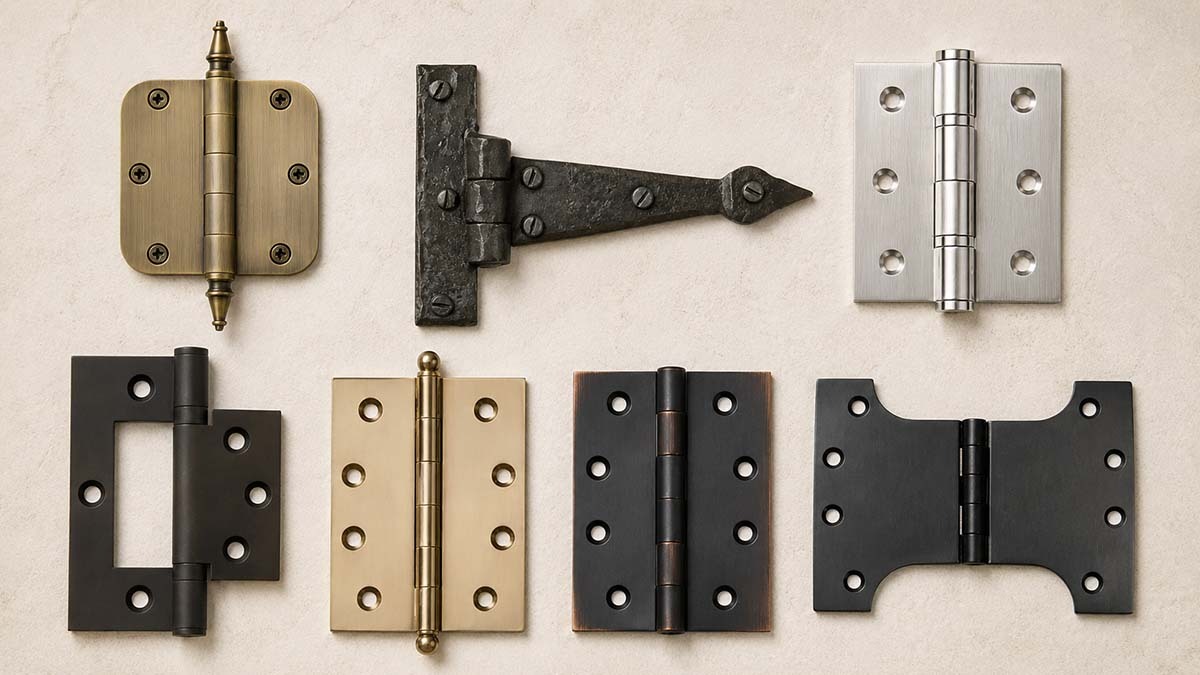
Understanding Door Hinge Parts and Measurements
What Are the Parts of a Door Hinge Called?
Hinge Leaves
The two flat sides of a hinge are called the leaves. One leaf is attached to the door and the other is attached to the door jamb or frame.
The leaves contain the screw holes.
Knuckles and Barrel
The rolled sections along the centre of the leaves are called the knuckles. The interlocking knuckles form the central barrel of the hinge.
This centre section is also sometimes informally called the hinge’s spine.
Hinge Pin
The hinge pin runs through the interlocking knuckles and holds the two leaves together.
Customers sometimes refer to the entire visible centre cylinder as the pin. Technically, the visible sections are the knuckles or barrel, while the pin runs through the middle.
Finial
A finial is the decorative tip visible at the top or bottom of some traditional hinges.
Finials may be round, ball-shaped, steeple-shaped or acorn-shaped. On many traditional loose-pin hinges, a finial can be unscrewed so the pin can be removed.
Ball Bearings
A ball-bearing hinge still has a central hinge pin. The bearings are positioned between sections of the knuckle to reduce friction and provide smoother movement.
How Are Door Hinges Measured?
Door hinges are normally described using their height and total width when fully open.
For example, a hinge listed as 100 × 75mm will generally be approximately:
• 100mm high
• 75mm wide when fully opened
The total open width includes both leaves and the central barrel area.
The stated height usually refers to the height of the hinge leaves. Decorative finials or projecting ends of the pin are generally not included.
See the below diagram on how to measure a standard door hinge.
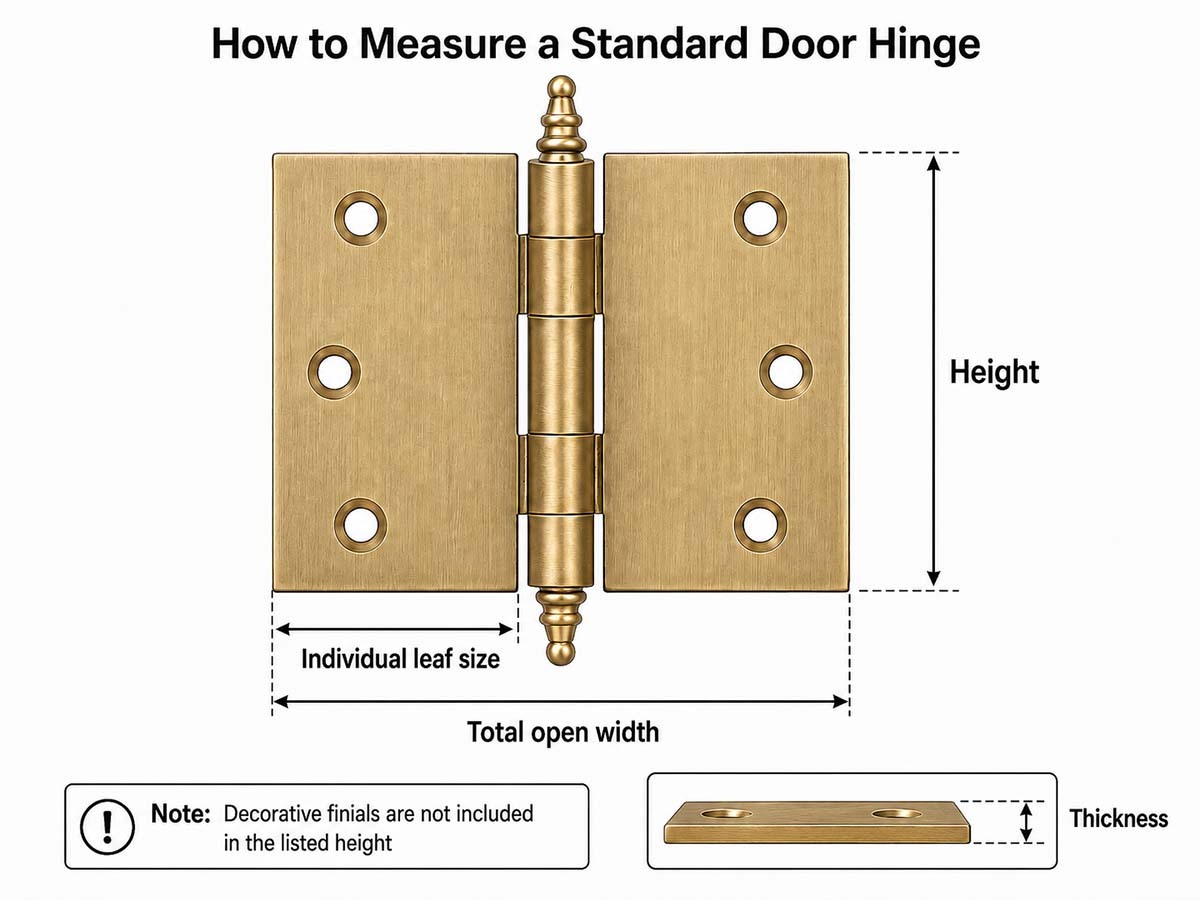
Figure 1. How to measure a standard door hinge to ensure you select the correct sized hinge for your door.
Hinge Height
Measure from the top to the bottom of the hinge leaf, excluding decorative finials.
Hinge Width When Open
Open the hinge flat and measure across both leaves and the central barrel.
Leaf Size
The leaf size is the width of one side of the hinge, excluding the central barrel.
For a standard morticed hinge, the leaf fitted into the edge of the door should generally be slightly narrower than the thickness of the door. It should not project beyond the face of the door.
Broad butt and parliament hinges are different because their additional width is intentionally used to move the pivot point away from the door.
Hinge Thickness
Many residential hinges in our range are approximately 2–4mm thick, although the exact thickness varies between brands, hinge types and sizes.
Thickness is particularly important when replacing an existing recessed hinge. A thicker or thinner hinge may change the gap around the door or require the existing recess to be adjusted.
Can New Hinges Use the Existing Screw Holes?
Possibly, but an exact match cannot be guaranteed.
Screw-hole numbers and patterns vary between:
• Brands
• Hinge sizes
• Product ranges
• Older and newer versions
• Square-corner and rounded-corner hinges
Two hinges can have the same advertised height and width but different screw-hole positions, leaf proportions or thicknesses.
Suppliers do not always provide the exact distance between each screw hole. When replacing hinges, compare the product diagram with the existing hinge and provide us with:
• A clear front-on photograph
• Overall hinge height
• Overall open width
• Individual leaf width
• Hinge thickness
• Number of screw holes
• Approximate hole spacing
• Door thickness
• Brand, if known
We can check whether there is a similar pattern in our range. If an exact match is not available, some patching, redrilling or adjustment to the existing recess may be required. This is common when replacing older hinges.
How to Choose the Correct Door Hinge
1. Is the Door Internal or External?
For internal doors, loose-pin, fixed-pin and easy-fit hinges may all be suitable, depending on the door.
For external doors, we generally recommend fixed-pin or ball-bearing hinges. A removable hinge pin can create a security risk, particularly when the hinge is accessible from outside.
See the below image showing the difference between loose pin and fixed pin hinges:
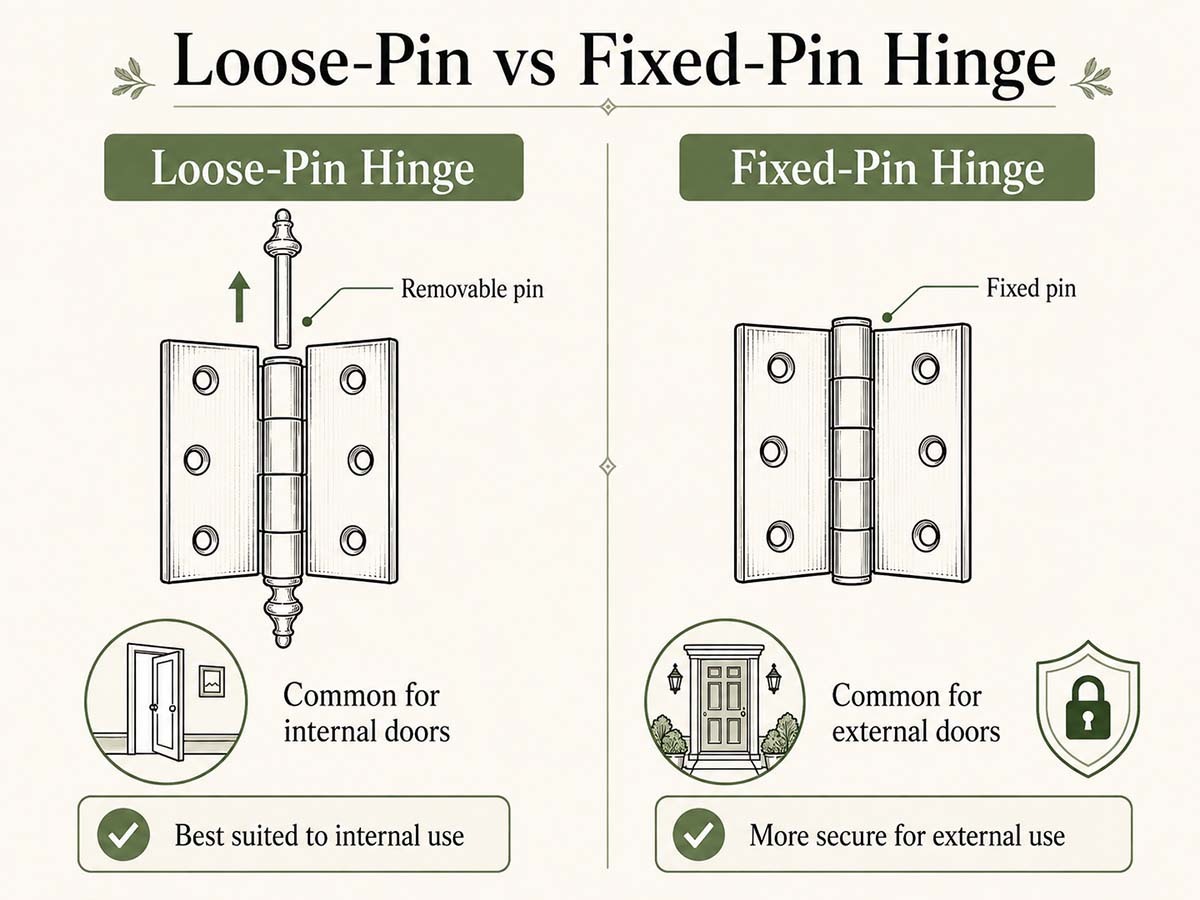
Fig 2. Comparison of loose pin and fixed pin hinges. Loose pin are best suited to internal use as they have a removeable pin, vs fixed pin hinges which are more secure for external doors.
2. How Large and Heavy Is the Door?
The weight and dimensions of the door affect the required:
• Hinge type
• Hinge size
• Hinge thickness
• Hinge material
• Number of hinges
A lightweight hollow-core door places much less load on its hinges than a solid timber entrance door.
Doors containing glass should be treated as heavy doors, even when their overall dimensions are relatively standard.
Other factors that increase the load on the hinges include:
• An unusually wide door
• A tall door
• Frequent or commercial use
• A door closer
• Heavy locks or pull handles
• People regularly pushing or pulling on the door
• External wind exposure
Do not select a hinge using door weight alone. Door height, width, frequency of use and the distance between hinges also affect the load.
3. How Thick Is the Door?
For standard loose-pin, fixed-pin and ball-bearing butt hinges, check the individual leaf size rather than relying only on the total open width.
The leaf fitted into the edge of the door should generally be slightly narrower than the door thickness.
4. How Far Does the Door Need to Open?
A standard hinge may be suitable when the door only needs to open normally.
When a recessed door needs to swing around a projecting architrave, moulding, cladding or brick wall and sit approximately 180 degrees against the wall, a broad butt or parliament hinge may be required.
The correct width depends on:
• The position of the closed door
• The distance to the outer edge of the obstruction
• The amount of hinge leaf fixed to the door
• The amount of hinge leaf fixed to the jamb
Use our parliament and broad butt hinge size calculator before selecting one of these hinges.
5. Does the Door Need to Be Removable?
A loose-pin hinge allows the centre pin to be removed. This is useful when repainting, renovating or moving large furniture.
A lift-off hinge is made from two interlocking sections. It allows the entire door to be lifted upwards and removed without first opening the door or tapping out a pin.
6. What Material and Finish Do You Need?
Most hinges in our range are made from solid brass, although some heavy-duty and decorative hinges are made from steel, forged brass or other materials.
Hinges are available in finishes such as:
• Polished Brass
• Satin Brass
• Antique Brass
• Unlacquered Brass
• Matte Black
• Chrome
• Satin Chrome
• Satin Nickel
• Polished Nickel
• Antique Copper
• Bronze
• Pewter
• Stainless Steel
Where possible, we recommend ordering the hinges and door handles from the same brand and in the same named finish. This gives the best chance of achieving a consistent colour and texture.
The same finish name can look different between manufacturers. One brand’s satin brass, for example, may be warmer, darker or more heavily brushed than another brand’s satin brass.
Hand-aged and living finishes can also vary naturally between products and may continue to change with handling and exposure.
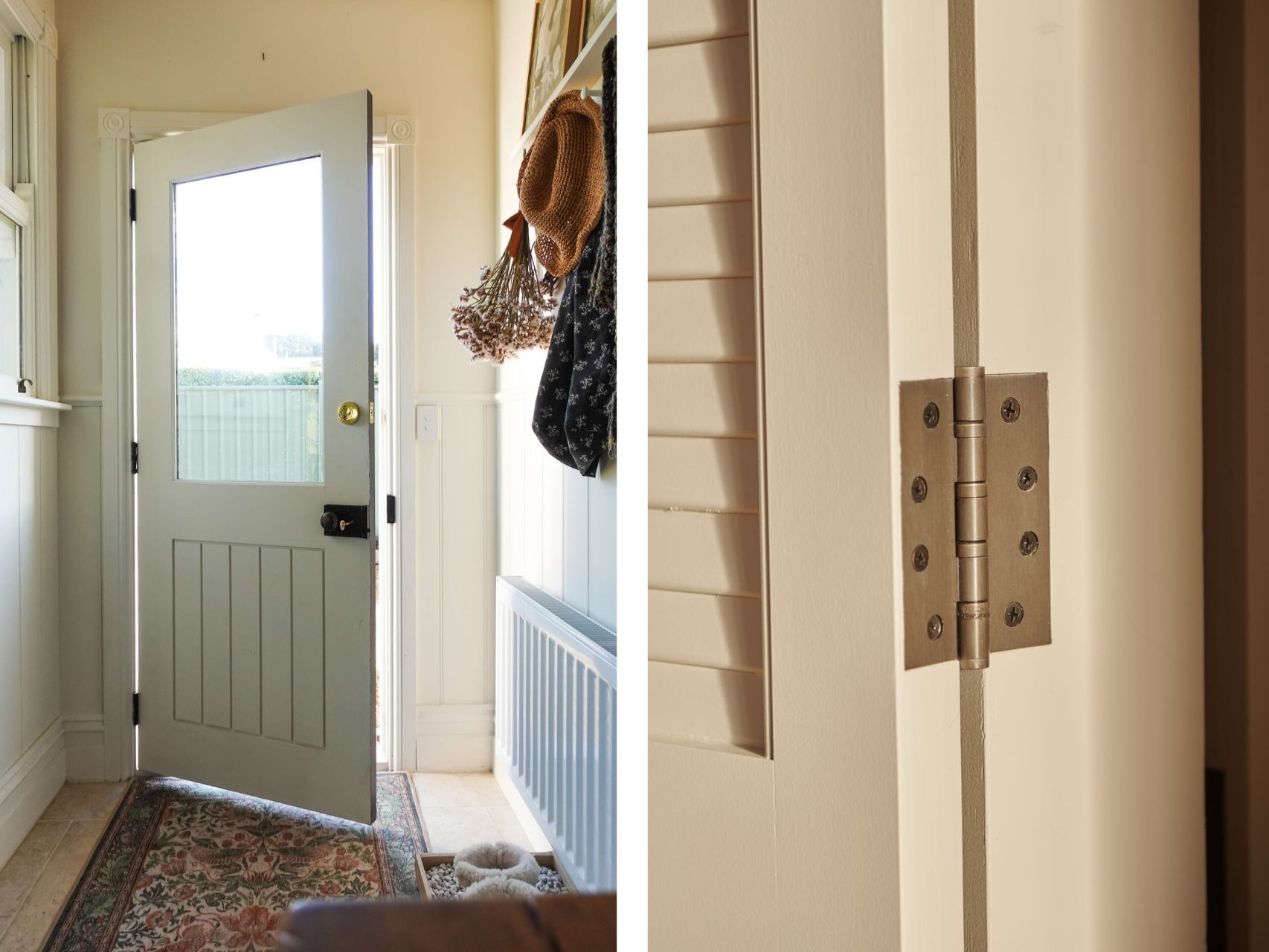
Types of Door Hinges
Loose-Pin Hinges
A loose-pin hinge is a butt hinge with a removable centre pin.
Once the pin has been removed, the door can be separated from the frame without unscrewing both hinge leaves.
On many traditional models, a decorative finial is unscrewed before the pin is tapped out.
Where Should Loose-Pin Hinges Be Used?
Loose-pin hinges are best suited to internal doors.
They are convenient when:
• A door may need to be removed for repainting
• Large furniture needs to be moved through a doorway
• Renovation or maintenance work is planned
• A traditional hinge with decorative finials is preferred
We do not recommend loose-pin hinges for external doors. If the pin is accessible, it may be possible to remove it and separate the door from the frame.
Our loose-pin hinge range includes options from Tradco and Domino, as well as more decorative and premium designs from Nostalgic Warehouse and Grandeur Hardware.
They are available in a range of sizes, finishes and finial styles. Some heavy-duty loose-pin hinges are made from steel, while others are manufactured from solid forged brass or other materials. Check the specifications on the individual product page.
Fixed-Pin Hinges
A fixed-pin hinge has a central pin that is not designed to be removed during normal use.
To remove the door, the hinge leaves generally need to be unscrewed from the door or frame.
Fixed-pin hinges are commonly used on external doors because they provide greater security than a standard removable-pin hinge.
They can also be used internally, although they are less convenient when a door needs to be removed for painting or maintenance.
The term fixed pin does not automatically mean heavy duty. The correct size, thickness, construction and number of hinges must still be selected for the door.
Ball-Bearing Hinges
A ball-bearing hinge is an anti-friction hinge designed to provide smoother movement and support heavier or more frequently used doors.
Ball bearings are installed between sections of the knuckle. They reduce metal-on-metal friction while the central hinge pin continues to hold the hinge together.
Ball-bearing hinges are a good option for:
• Solid timber entrance doors
• Large external doors
• Doors containing glass
• Frequently used doors
• Doors that need a smoother action
• Doors that place greater strain on standard hinges
The bearings can help reduce sticking, squeaking and premature wear.
Ball-bearing hinges are among the strongest and most practical residential options in our range, particularly for heavy single doors. However, the actual load capacity depends on the product’s size, thickness, material and construction.
Broad Butt Hinges
A broad butt hinge, sometimes called a wide-throw hinge, is a rectangular hinge that is much wider than a standard butt hinge.
It moves the pivot point further away from the face of the door. This allows a recessed door to swing around a projecting:
• Architrave
• Door frame
• Moulding
• Wall lining
• Cladding
• Brick wall
When correctly sized, the door may be able to open approximately 180 degrees and sit back against the wall.
Broad butt hinges are frequently used on French and double doors, but they can also be used on single doors where additional clearance is required.
Their large rectangular leaves provide more material and fixing area than many standard hinges, making them useful for heavier doors that also require additional clearance.
Parliament Hinges
A parliament hinge performs the same general function as a broad butt hinge but has a more decorative heritage shape.
It is recognisable by the curved or semicircular cut-out sections at the top and bottom of the leaves.
Parliament hinges are commonly used on traditional French doors where the doors need to swing around projecting trim or brickwork and sit back against an external wall.
What Is the Difference Between a Broad Butt and Parliament Hinge?
Both are wide-throw hinges designed to move the pivot point away from the door.
A broad butt hinge has full rectangular leaves and a central barrel that generally extends for most of the hinge height.
A parliament hinge has decorative cut-outs and a shorter central barrel in relation to the overall height of the leaves.
Because a broad butt hinge contains more metal across its rectangular leaves, it is generally the stronger option for a particularly heavy door, subject to the specifications of the individual product.
Parliament hinges are often chosen where their more decorative heritage appearance better suits the door.
The below diagram demonstrates the difference between broad butt and parliament hinges.
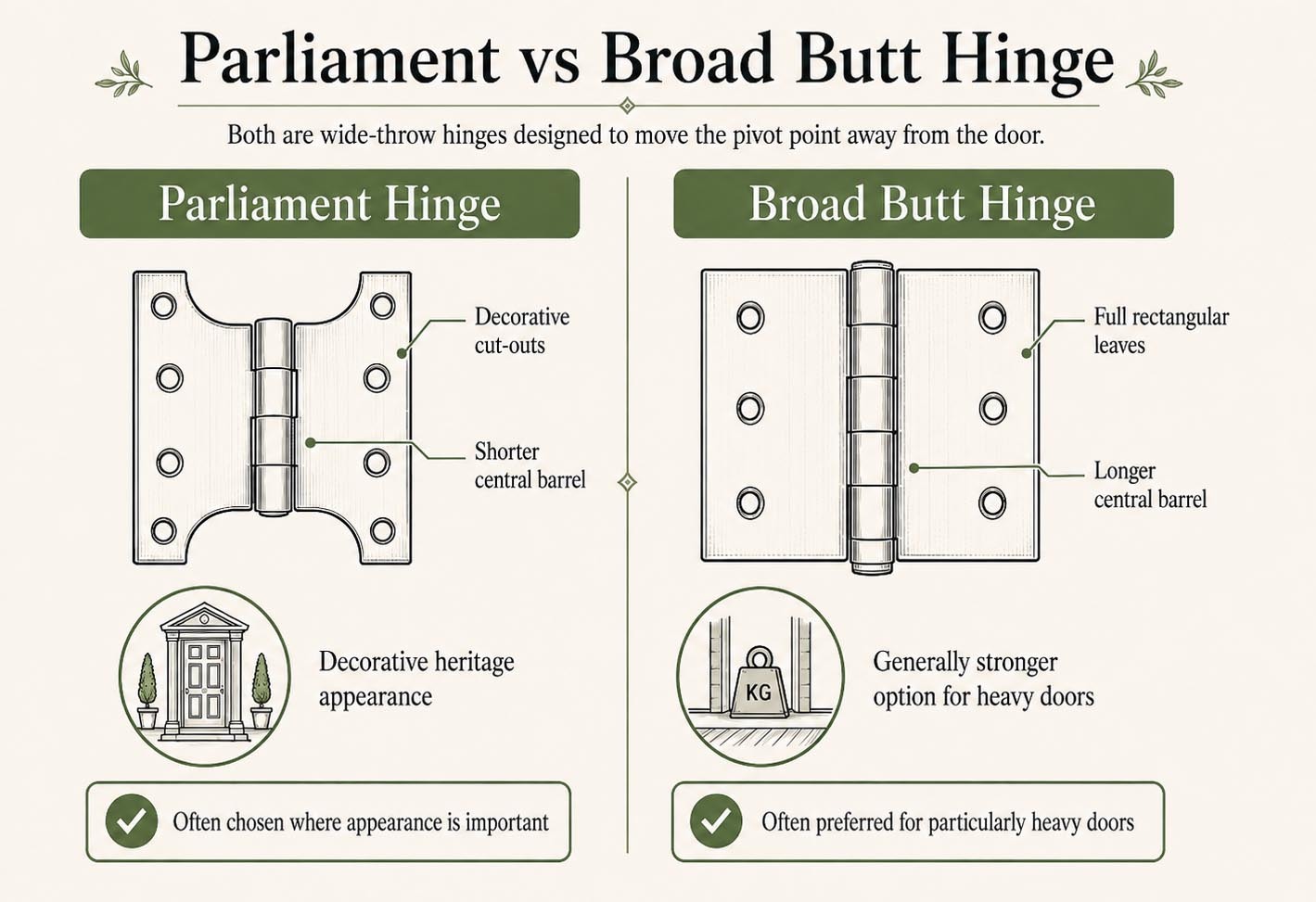
Fig 3. Comparison of a parliament hinge and a broad butt hinge. Both serve generally the same purpose and the main difference is the design.
How to Calculate Broad Butt or Parliament Hinge Width
Correct sizing is important.
A hinge that is too narrow may not allow the door to clear the architrave or wall. An unnecessarily wide hinge increases the projection and leverage placed on the hinge.
As a general guide:
1. Measure from the face of the closed door to the farthest edge of the wall, architrave or projection the door must swing around.
2. Allow for the hinge leaf attached to the door.
3. Allow for the hinge leaf attached to the jamb.
4. Select the closest suitable width that positions the hinge barrel near the required pivot point.
A commonly used approximate allowance is 30mm of leaf fixed on each side, or 60mm in total.
For example:
• Distance from the door face to the outer edge of the wall: 120mm
• Approximate combined hinge setback: 60mm
• Indicative hinge width: 180mm
This is a guide only. Door thicknesses, frames and architraves vary, so use our parliament and broad butt hinge calculator and confirm the selection with the installer.
Lift-Off Hinges
A lift-off hinge is made from two separate sections.
One section remains fixed to the door and the other remains fixed to the frame. The two parts interlock, allowing the door to operate normally while also allowing it to be lifted vertically and removed.
Unlike a loose-pin hinge, no centre pin needs to be tapped out.
Why Are Lift-Off Hinges Used on Toilet and Bathroom Doors?
Lift-off hinges are commonly used on inward-opening doors to small toilets or powder rooms.
If a person collapses behind the door, they may block it from swinging inwards. A correctly installed lift-off door can be raised and removed from outside the room to provide emergency access.
Lift-off hinges are one possible way of meeting emergency-access requirements for an inward-opening sanitary compartment. Depending on the room and applicable building requirements, other solutions may include an outward-opening door, sliding door or sufficient clear space inside the room.
The project’s builder or certifier should confirm the applicable requirements.
Can Lift-Off Hinges Be Used Externally?
We recommend lift-off hinges for internal doors only. Because the door can be removed without unscrewing the hinges, they are not normally suitable for an external security door.
Do Lift-Off Hinges Need Clearance Above the Door?
Yes. There must be enough vertical space between the top of the door and the underside of the frame head to lift the door far enough for the two sections to disengage.
The latch or lock must also allow the door to be removed as intended. A bathroom or toilet privacy latch may also require an external emergency release.
How Do I Determine the Handing?
Stand on the side of the door where the door swings towards you.
• Hinges on the left require left-hand lift-off hinges.
• Hinges on the right require right-hand lift-off hinges.
Always compare the door with the handing diagram on the product page before ordering.
Easy-Fit, Hirline and Flush Hinges
Easy-fit hinges are thin, compact hinges designed to be installed without cutting a traditional hinge recess into both the door and frame.
They may also be called:
• Hirline hinges
• Flush hinges
• Non-mortice hinges
Their design allows the leaves to close together without creating the same combined thickness as a standard butt hinge.
They are popular with DIY installers because there is usually no need to chisel or rout a full mortice into the timber.
Easy-fit hinges are most commonly used on:
• Lightweight internal doors
• Cupboard-style doors
• Some bi-fold doors
• Installations where a conventional recessed hinge is unnecessary
• DIY projects requiring simpler installation
They should not automatically be used on a heavy external door unless the individual product is specifically rated for that application.
Heavy-Duty Hinges
A heavy-duty hinge is designed to support a larger, heavier or more frequently used door than a standard residential hinge.
Heavy-duty describes the hinge’s performance rather than one particular shape.
Heavy-duty options may include:
• Ball-bearing hinges
• Heavy-gauge fixed-pin hinges
• Heavy-duty loose-pin hinges
• Large broad butt hinges
• Some ball-bearing parliament hinges
• Purpose-designed commercial hinges
For a heavy single external door, a ball-bearing hinge is often the first option to consider.
For a heavy recessed door that must clear an architrave, a suitably rated broad butt hinge may be more appropriate.
Do not choose a heavy-door hinge based on material alone. Steel, brass and stainless-steel hinges can perform differently depending on their thickness, dimensions, pin construction and overall design.
Decorative and Dummy Hinges
Decorative hinges may be functional or non-functional.
Functional decorative hinges support the door while also providing a visible traditional feature. Examples may include:
• Decorative loose-pin hinges
• Tee hinges
• Arrow-head hinges
• Penny-end hinges
• Decorative parliament hinges
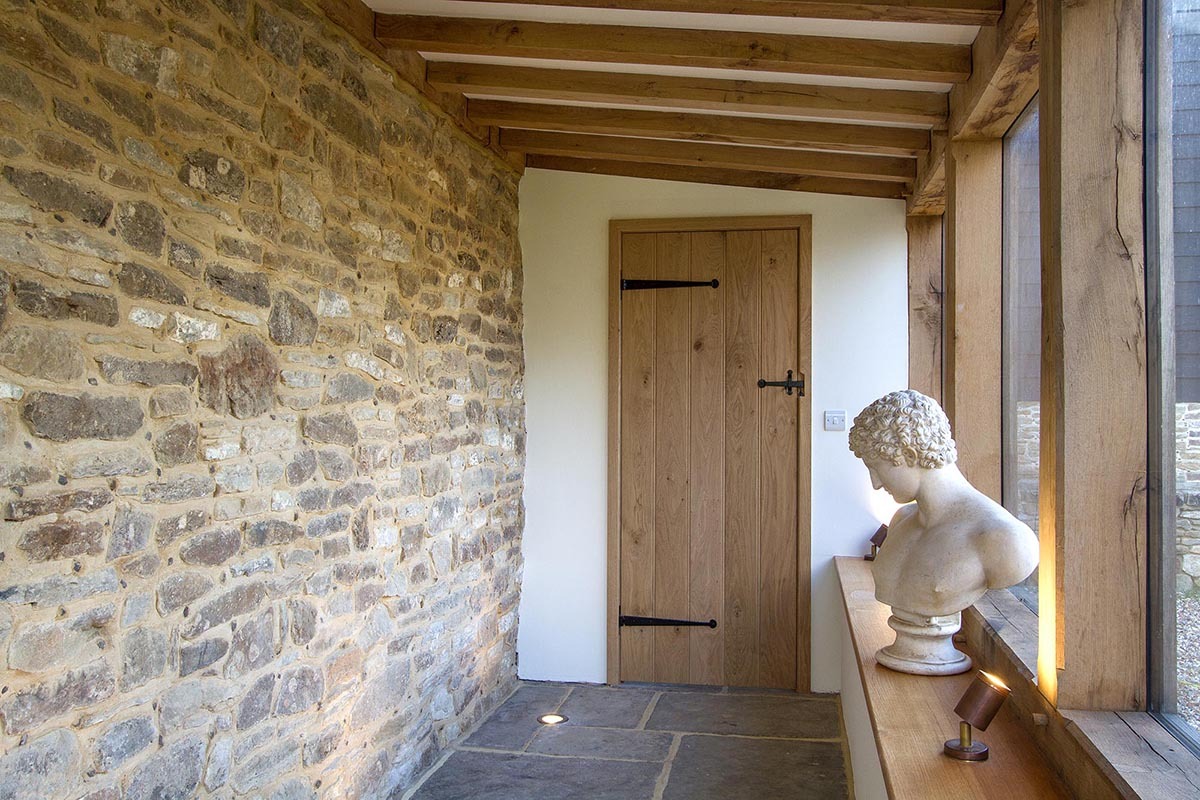
A dummy hinge is different because it is purely decorative. It creates the appearance of a traditional strap, gate or period hinge but does not support the door or control its movement.
Dummy hinges may be used on:
• Internal doors
• External doors, where the material is suitable
• Gates
• Cupboards
• Barn-style doors
• Hamptons, farmhouse or heritage-style projects
The door must still have suitable working hinges installed elsewhere.
Check the material before using a dummy hinge outside. Some iron and mild-steel products may develop rust in damp or exposed conditions.
How Many Hinges Does a Door Need?
There is no single quantity that applies to every door.
As a general residential guide:
• A standard lightweight hollow-core internal door commonly uses two hinges.
• A solid or heavier door commonly uses three hinges.
• A door containing glass should generally use three hinges.
• A tall, wide, frequently used or unusually heavy door may need additional hinges.
• Some heavy-duty ball-bearing hinges may support a door using two hinges, but only where the product specification and installer confirm this.
The hinge type and size affect the quantity required. A small standard hinge and a large ball-bearing hinge cannot be treated as equivalent.
The installer should consider:
• Door weight
• Door height and width
• Door thickness
• Whether the door contains glass
• Hinge size
• Distance between hinges
• Frequency of use
• External wind exposure
• Whether a door closer is installed
• The strength and condition of the door and frame
Adding extra hinges does not correct an unsuitable hinge size or a weak door frame.
Important Door Hinge Ordering and Installation Checks
Are Hinges Sold Individually or in Pairs?
This varies between products and brands.
Most of our hinges are sold individually. Tradco and Domino hinges are sold individually, while some From The Anvil and other imported hinges are sold as pairs.
Never assume that one unit means one pair. Check the product title and the Singular or Sold as Pair information before calculating the quantity.
For example, if a hinge is sold individually and three hinges are required on each of four doors, the quantity required is 12.
Are Screws Included with Door Hinges?
Yes, our hinges include matching screws.
The included screws are commonly intended for timber doors and frames.
Can Door Hinges Be Installed on a Metal Door?
Most traditional residential hinges in our range are primarily designed for timber doors and are commonly supplied with timber screws.
Metal doors and frames may require:
• Different screws or bolts
• Rivnuts or threaded inserts
• Reinforced fixing points
• Precisely prepared hinge positions
• Specialist installation
Metal cannot usually be adjusted in the same way as timber. A locksmith, door manufacturer or suitably experienced installer should confirm suitability before hinges are ordered for a metal door.
What Hinges Should Be Used on a Fire Door?
A fire-rated door is a complete tested door system.
Its hinges, fixings, frame preparation, quantity and installation method must comply with the door manufacturer’s approved system and the applicable building requirements.
Do not replace fire-door hinges with decorative residential hinges simply because the measurements appear similar. Confirm the approved hardware with the fire-door manufacturer, builder or certifier.
Door Hinge Selection Checklist
Before purchasing hinges, record the following:
• Is the door internal or external?
• Is it a single, French, double or bi-fold door?
• What is the door made from?
• Does it contain glass?
• What are the door’s height, width and thickness?
• What is its approximate weight?
• How far must it open?
• Does it need to clear an architrave, wall, cladding or brickwork?
• Does the door need to be removable?
• Is emergency removal required?
• Is the door left- or right-handed?
• Is the door fire-rated?
• Is a door closer fitted?
• Is the installation residential, commercial or high traffic?
• What hinge finish is required?
• What brand is the other door hardware?
• Are the hinges replacing existing hinges?
• What are the existing hinge dimensions and screw-hole pattern?
• Are the hinges sold individually or as a pair?
• Has the installer confirmed the size and quantity?
Frequently Asked Questions About Door Hinges
What Is the Best Hinge for an Internal Door?
A loose-pin hinge is a practical choice for many standard internal doors because it allows the door to be removed more easily. Easy-fit hinges may suit lightweight doors where a simpler installation is preferred.
What Is the Best Hinge for an External Door?
A fixed-pin hinge is generally recommended. For a heavy external door, consider a ball-bearing or purpose-designed heavy-duty hinge.
What Is the Difference Between Fixed-Pin and Loose-Pin Hinges?
A loose-pin hinge has a removable centre pin. A fixed-pin hinge cannot normally be separated without unscrewing it, making it more suitable for external doors.
What Hinge Is Best for a Heavy Door?
Ball-bearing hinges are usually the first option to consider for a heavy single door. A broad butt hinge may be more appropriate if the door also needs additional clearance around an architrave.
How Many Hinges Do I Need?
A lightweight hollow-core door commonly uses two hinges. Solid, glazed, tall or heavy doors commonly use three, subject to the selected hinge and the installer’s advice.
What Size Hinge Do I Need?
The hinge size depends on the door’s thickness, dimensions and weight. For a standard butt hinge, the individual leaf should normally be slightly narrower than the door thickness.
Do All French Doors Need Parliament Hinges?
No. Broad butt or parliament hinges are only required when the doors need extra clearance to swing around a projecting wall, frame or architrave.
Which Is Stronger: a Parliament or Broad Butt Hinge?
A broad butt hinge generally contains more metal and is usually the stronger option for a heavy door. Always check the individual product specifications.
Are Lift-Off Hinges Required on Every Bathroom Door?
No. They are one possible solution for providing emergency access through an inward-opening toilet or bathroom door. The builder or certifier should confirm the applicable requirements.
Do Easy-Fit Hinges Need to Be Recessed?
Easy-fit or Hirline hinges are designed to avoid the full recess required by a standard butt hinge, although installation can vary between products.
Can I Replace a Hinge Using Only Its Height and Width?
Not reliably. Also check the leaf size, thickness, corner shape, screw-hole pattern and existing hinge recess.
Can I Mix Hinge and Door Handle Brands?
Yes, but finishes may not match exactly. Choosing the same brand and named finish normally gives the most consistent result.
Can Restoration Online Choose the Hinge Size for Me?
We can help narrow down the suitable types and available sizes when provided with measurements, photographs and installation details. The final structural selection should be confirmed by the builder, carpenter, door manufacturer or installer.
Choosing Matching Door Hardware
Once the hinges have been selected, consider the other hardware required for the door.
For an internal door, this may include:
• Passage or privacy door handles
• A tubular latch or privacy latch
• A door stop
For an external door, this may include:
• A lever handle or door knob
• An entry handleset
• A mortice lock, deadbolt or euro lock
• A door stop or cabin hook
• A door knocker
• A centre door knob
• A letter plate
• A doorbell
• Flush bolts or surface bolts for French doors
Choosing these products from the same brand and finish as the hinges can help create a more consistent result.
Browse our complete range of door hinges, or contact us with your door measurements and photographs if you need help narrowing down the available options.


