


14/05/26
French Door Handles & Hardware: A Simple Guide
French doors are beautiful - but choosing the right hardware for them can be confusing.
We hear from many customers who are unsure about dummy handles, rebated locks, or how to measure for narrower door stiles. Our detailed guide below breaks down how to choose your French door handles and hardware simply, so you can order with confidence.
Quick answer: What hardware do French doors need?
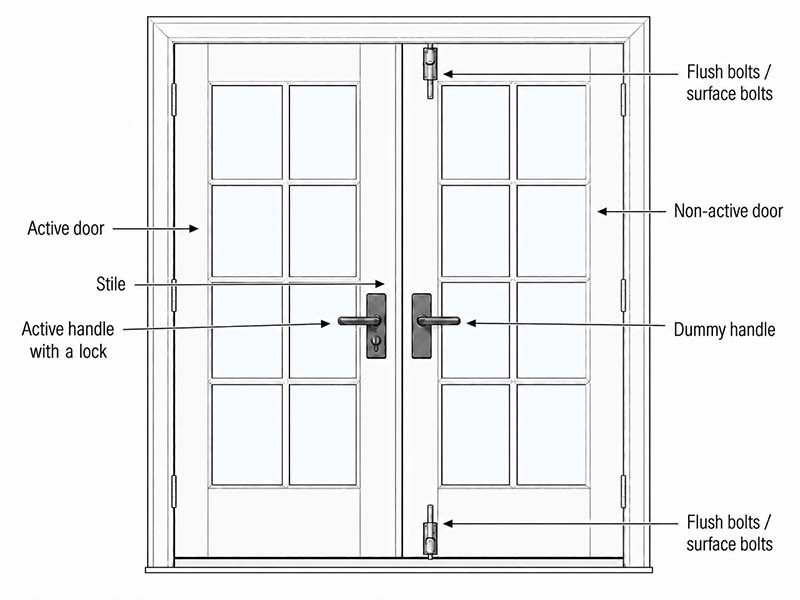
Most French doors need one working handle or knob set for the active door, fixed dummy handles for the inactive door, and flush bolts or surface bolts to secure the inactive door. If the doors are rebated, you may also need a rebated lock or latch. Always check the backset size, especially if your French doors have narrow stiles.
1. First things first: how French doors usually work
Most French door setups consist of:
• One active door (the door you open and close most often)
• One inactive door (which usually stays fixed in place and is only opened when full access is needed)
Because only one door actually operates day-to-day, the hardware requirements for each door are different - and this is where confusion often starts.
2. What hardware does each French door usually need?
Active door (the one you open)
Typically requires:
• A working lever door handle or door knob
• A latch or lock
Inactive door
Typically requires:
• A fixed dummy handle for each side of the inactive door. For lever handles, this usually means one left-hand dummy lever and one right-hand dummy lever so the handles face the correct direction on each side.
• Flush bolts or surface bolts
This is the most common setup for French door hardware, and it’s what we usually recommend for a typical French door pair.
Can I use normal door handles on French doors?
It depends on your door set up, but most handles will work on French doors.
Internal French doors will only need passage (non-locking) or privacy (low security bathroom lock) hardware, whereas external French doors usually need a high security lock.
You also need to check whether the doors are rebated and whether the stile is wide enough for the chosen backset. Not all brands offer rebated locks/latches or shorter backset sizes, so if you're unsure about this, our team will be happy to help!
3. What is a dummy handle (and why is it fixed)?
A dummy handle is a handle that looks exactly like a normal door handle — but it does not operate a latch or lock.
Why dummy handles are used on French doors
The inactive door:
• Does not open regularly
• Is usually held in place by flush bolts or a top/bottom shoot bolt
• Does not need a moving handle mechanism
Instead, it needs:
• A handle for symmetry and appearance
• A solid, fixed handle that won’t move or loosen over time
Do I need handles on both French doors?
Technically no, you don't need dummy handles on the non-active door for the French doors to function. However dummy handles will make the door look balanced and symmetrical, so are usually added for this reason.
Why dummy handles are fixed (this is important)
Dummy handles are fixed in place on purpose.
If a handle on an inactive door were allowed to move:
• There is nothing inside the door for it to operate
• Repeated movement would eventually cause sagging or loosening
• It can damage the door over time
A fixed dummy handle:
• Feels solid
• Stays aligned
• Preserves the look and integrity of the door
In short: movement is unnecessary on the inactive door, and fixing the handle is what keeps it looking and functioning properly long-term.
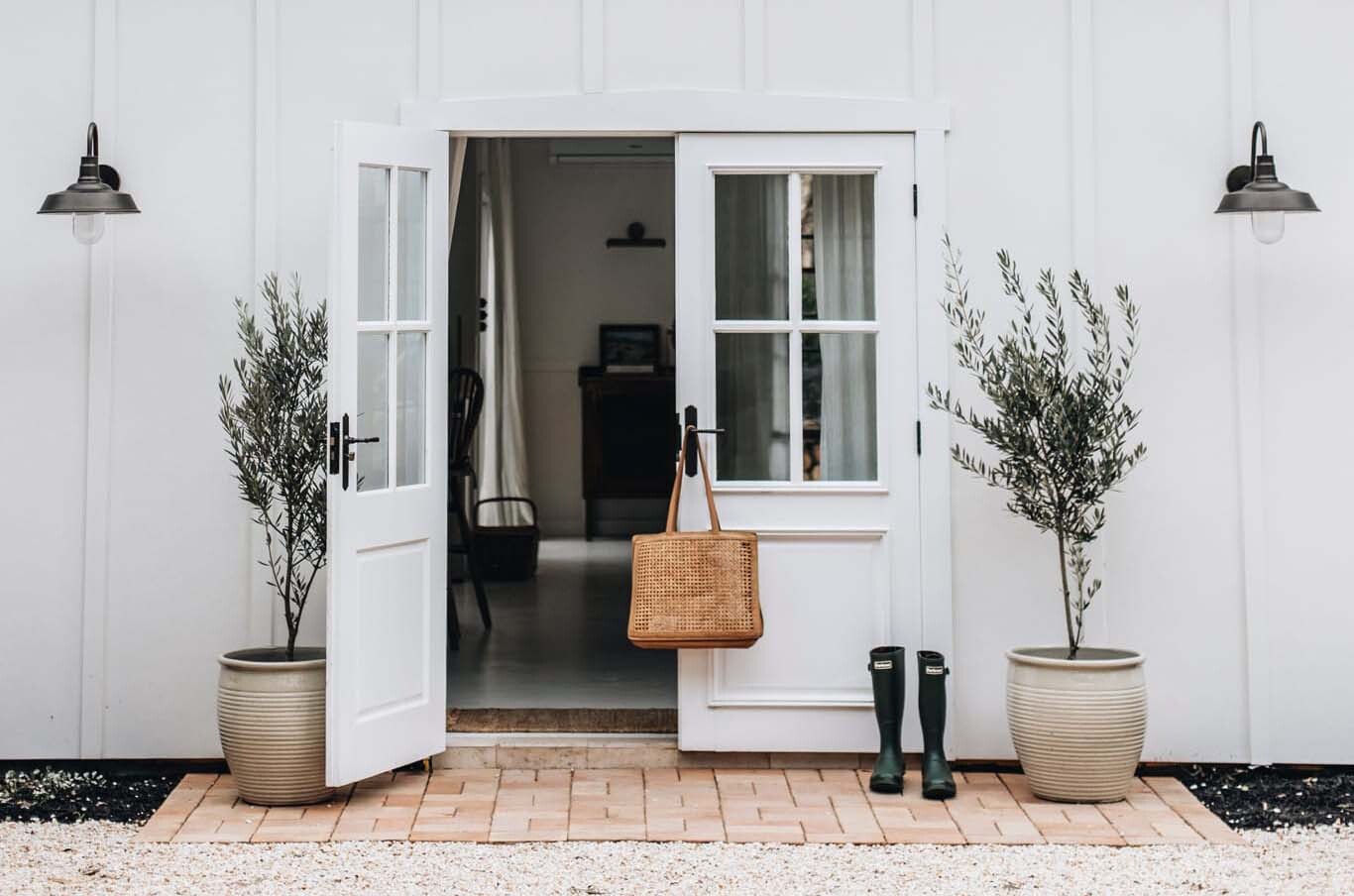
4. What is a rebated French door (and do I need a rebated lock)?
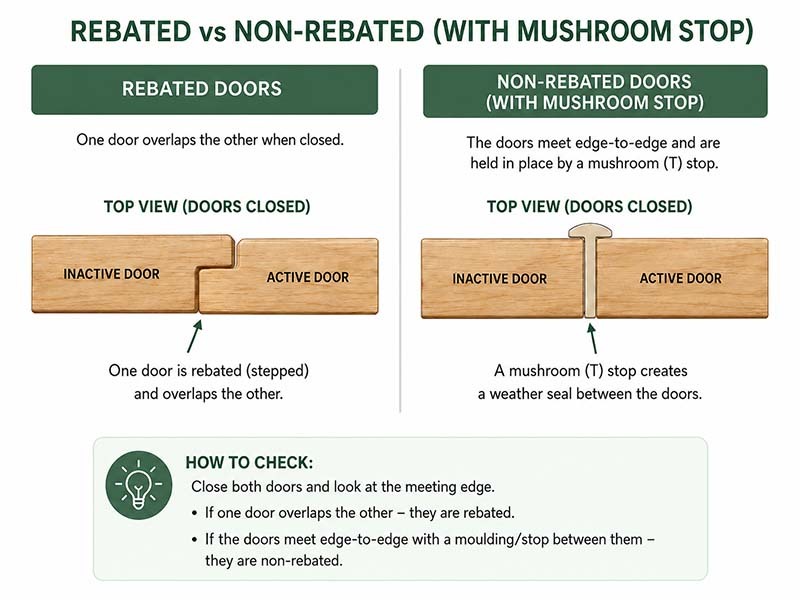
A rebated door is a door where the edges overlap when closed, rather than meeting flush. This helps the doors close neatly together and improves alignment, strength, and weather sealing.
French doors are often rebated - but not always. Some French doors may instead have just a flat edge with a mushroom stop - a T-shaped timber moulding strip on one door to create a weather seal.
How to tell if your doors are rebated
When both doors are closed:
• If one door overlaps the other → they are rebated
• If the doors meet edge-to-edge → they are not rebated
Why this matters for locks
If your French doors are rebated:
• A rebated lock/latch is usually required on the active door
• This ensures the lock/latch sits and operates correctly across the overlap
If your doors are not rebated:
• A standard (non-rebated) lock/latch is typically suitable
If you’re unsure, take a clear photo of the edge of the door and our team can confirm this very quickly.
5. Backset size: extra important for French doors
French doors often have narrower stiles (the vertical part of the door where the handle sits), which means backset measurement is critical.
What is a backset?
The backset is the distance from the edge of the door to the centre of the handle or keyhole.
Some French doors cannot accommodate a standard backset due to their slimmer profile - if the stile is too narrow, there may not be room for the body of a standard backset lock/latch. Most of our brands offer a shorter backset size latch/lock for narrower stiles.
Rather than guessing, we strongly recommend measuring before ordering.
We’ve put together a clear step-by-step guide here:
Measuring Your Backset
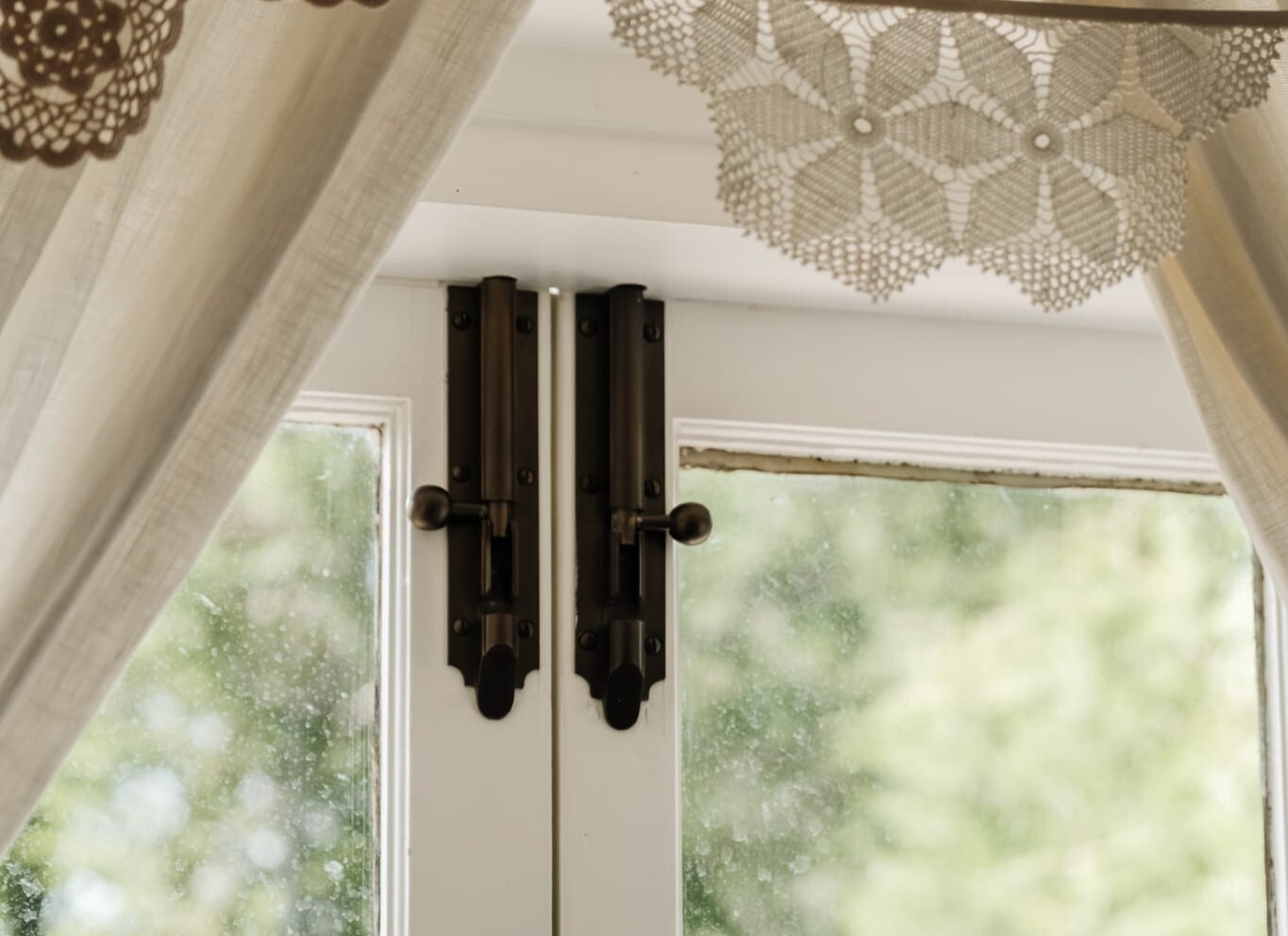
6. What are flush bolts or surface bolts?
Flush bolts and surface bolts are used to secure the inactive door in a pair of French doors. The inactive door is the door that usually stays closed while the active door opens and closes day-to-day.
These bolts slide up into the head of the door frame and/or down into the floor or threshold, holding the inactive door firmly in place.
Flush bolts
Flush bolts are recessed into the edge or face of the door, so they sit neatly within the timber. This gives a cleaner, more discreet look.
They are often chosen when you want the bolts to be less visible, particularly on more refined or traditional French doors. Because they need to be cut into the door, they usually require more precise installation.
Surface bolts
Surface bolts are fitted onto the face of the door rather than recessed into it. They are more visible, but they can be easier to install, especially when retrofitting hardware to existing doors.
They can also be a good option if you want the bolt to become part of the door’s traditional look, particularly with heritage-style hardware. We have a range of barrel bolts and larger panic bolts and tower bolts, depending on the look you want to achieve.
Which should you choose?
Choose flush bolts if you want a neater, more concealed finish and are happy for the door to be morticed or routed to fit them.
Choose surface bolts if you want an easier retrofit option, prefer a visible traditional hardware detail, or your door is not suitable for recessed bolts.
For external doors where deadlocking is required, we recommend either flush bolts installed on the edge of the door (this is most common), or key locking bolts on the face of the door. This will prevent the doors from being able to be opened from the inside without using a key to unlock them.
In most French door setups, the inactive door will need a bolt at the top and usually one at the bottom to hold it securely in place.
7. Common French door hardware mistakes (and how to avoid them)
We see these come up again and again:
• Ordering two functioning handles instead of one handle + one dummy
• Assuming the inactive door needs a moving handle
• Not checking whether the doors are rebated
• Ordering a standard backset size for a narrow French door stile
Taking a few minutes to check these details before ordering can save time, cost, and frustration later.
French Door FAQs
What handles do I need for French doors?
Most French doors need one working handle set for the active door, plus fixed dummy handles for the inactive door. The inactive door is usually secured with flush bolts or surface bolts.
Do both French doors need working handles?
No. In a typical French door pair, only the active door needs a working handle, latch or lock. The inactive door usually has fixed dummy handles for appearance and symmetry.
What is a dummy handle for French doors?
A dummy handle is a fixed handle that does not operate a latch or lock. It is used on the inactive door so both French doors look balanced, without adding unnecessary moving parts.
Do I need flush bolts on French doors?
In most cases, yes. The inactive door usually needs flush bolts or surface bolts to hold it securely closed at the top and/or bottom of the door.
How do I know if my French doors are rebated?
Close both doors and look at the meeting edge. If one door overlaps the other, the doors are rebated. If they meet edge-to-edge with a moulding or mushroom stop between them, they are usually non-rebated.
What backset do I need for French door handles?
The correct backset depends on the width of your door stile and the lock or latch you are using. French doors often have narrower stiles, so it’s important to measure from the edge of the door to the centre of the handle or keyhole before ordering.
Can I use standard door handles on French doors?
Sometimes, but it depends on your door setup. The active door may suit a standard handle, latch or lock, but the inactive door usually needs dummy handles instead. You also need to check the backset size and whether the doors are rebated.
What if my French doors are too narrow for a standard latch?
If the stile is too narrow for a morticed latch or lock, a surface-mounted French door latch may be suitable for internal doors that do not need to lock. These sit on the face of the door rather than being fitted inside the door edge.
Still unsure? We’re happy to help
French door hardware doesn’t need to be complicated - but every door setup is slightly different.
If you’re unsure:
• Send us some photos of the doors (a clear photo of the edge as well as of the doors closed)
• Measure your backset using our guide
Our team can help confirm exactly what you need before you place your order.
Shop Door Handles
Shop Door Bolts


